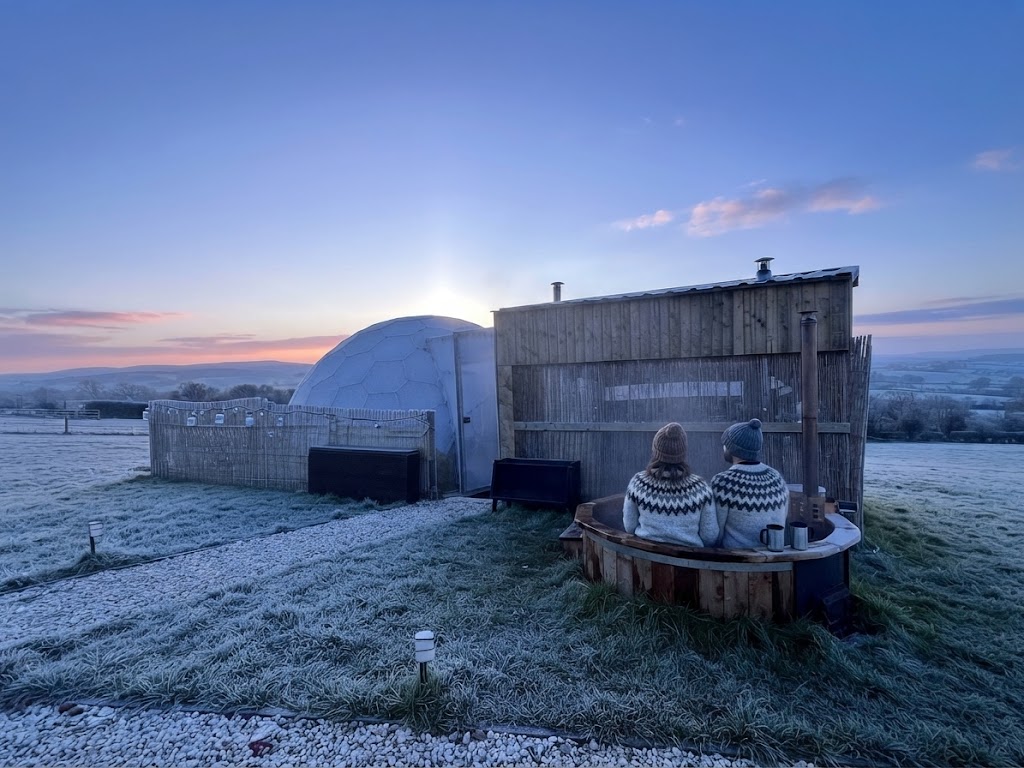
Eryri covers 823 square miles and permits very little new glamping inside its boundary, so most sites sit just outside — Betws-y-Coed, the Conwy Valley and Bala are the practical bases. Expect £120–£200, more with a hot tub. Yr Wyddfa needs pre-booked parking at Pen y Pass. Zip World is the big non-walking activity. Autumn is the best season and the best value.
Glamping Sites in Snowdonia
Top Glamping Sites to Visit
Eryri National Park covers 823 square miles of northwest Wales and contains nine mountain ranges, over 100 lakes, and Yr Wyddfa — at 1,085 metres the highest peak in Wales and England. Around 4 million people visit each year. Glamping supply has not kept pace, deliberately: planning inside a Welsh national park is restrictive, and Eryri's authority is among the strictest.
The result is a ring of sites around the park boundary rather than inside it. Practical bases:
- Betws-y-Coed and the Conwy Valley — the classic gateway. Everything within half an hour, plus shops and pubs.
- Bala and Penllyn — the southeast corner. Lake, white water, quieter, cheaper.
- Beddgelert and Nantgwynant — properly in the mountains, very limited supply, spectacular
- Porthmadog and the coast — combines mountains with beaches, good for families
- Dolgellau and Cadair Idris — the southern park. Underrated, emptier, and Cadair is a better mountain than Snowdon.
Snowdonia Glamping Holidays and similar operators run pods, cabins and canvas units across this ring. Booking works the same way everywhere: units with hot tubs go first, then units with ensuites, then everything else.
Amenities Offered at Glamping Sites
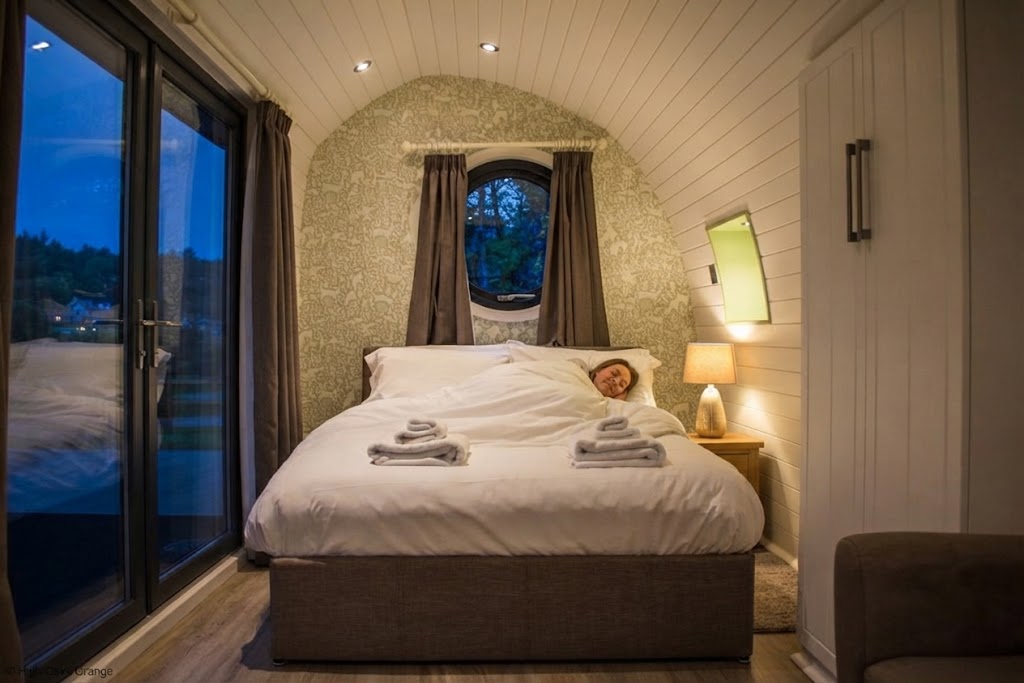
Standard for the region: insulated pod or cabin, electric heating, real bed with bedding, kettle and fridge minimum, decking, fire pit. Then it tiers up.
| Tier | Rate | What you get |
|---|---|---|
| Standard | £100–£130 | Heating, bed, kettle, shared shower block |
| Ensuite | £130–£170 | Private shower room, kitchenette, decking |
| Hot tub pod | £170–£230 | Private tub, ensuite, full kitchen |
| Luxury cabin | £220–£300 | Log burner, underfloor heating, seclusion, tub |
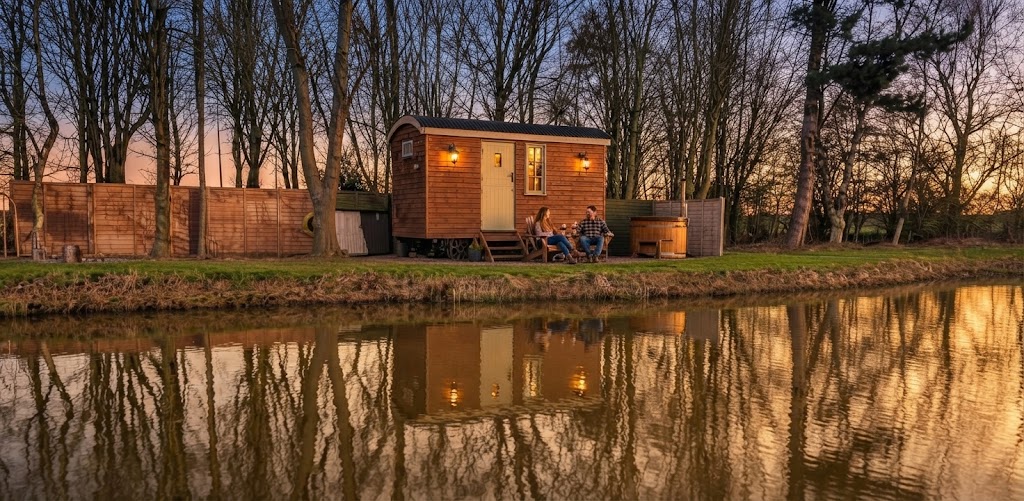
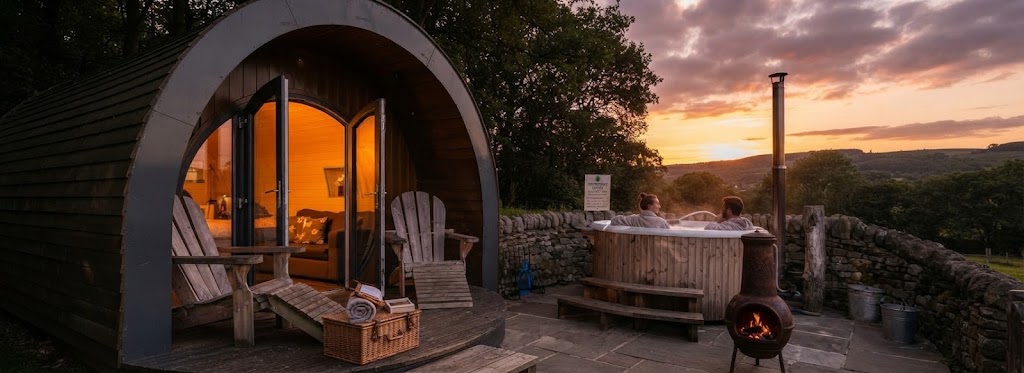
Glamping pods with hot tubs are the most-requested unit in the region and the hardest to get. After a day on the mountain the appeal is not subtle — hot water at 38°C fixes legs that have descended 900 metres. If you want one for a summer weekend, book in January. More on the format at our North Wales hot tub page.
Luxury features that show up here specifically: drying rooms or boot stores (a real advantage in a wet region), packed-lunch service, and secure bike storage.
Exploring Snowdonia's Natural Attractions
Natural Wonders Near Glamping Sites
Eryri became Wales's first national park in 1951. The landscape is glacial — U-shaped valleys, hanging corries, ribbon lakes — carved out of some of the oldest rock in Britain. Cwm Idwal was the first National Nature Reserve in Wales and it's where Darwin worked out that glaciers had been there.
Yr Wyddfa has six main routes to the summit:
- Llanberis Path — longest, easiest, follows the railway. Busiest by a distance.
- Pyg Track — from Pen y Pass, the best balance of effort and drama
- Miners' Track — flat then steep, past Llyn Llydaw
- Watkin Path — from sea level, hardest ascent, loose scree near the top
- Rhyd Ddu — quietest, fine ridge walk
- Crib Goch — a Grade 1 scramble along a knife-edge ridge. Not a walk. People die on it.
The park is called Eryri in Welsh and officially adopted the name in 2022, with Yr Wyddfa replacing Snowdon in the authority's own usage. The reason is straightforward: these are the original names, and Welsh is a living language here — Gwynedd has the highest proportion of Welsh speakers in the country. Use the Welsh names and you'll get on better locally.
Activities to Enjoy While Glamping
Non-walking Eryri is better than people expect.
- Zip World — Velocity 2 at Penrhyn Quarry is the fastest zip line in the world at up to 125mph. Also Bounce Below, a network of trampolines in a slate cavern, and Zip World Fforest near Betws-y-Coed.
- Llechwedd Slate Caverns — deep mine tour at Blaenau Ffestiniog, part of the UNESCO-listed Slate Landscape
- Ffestiniog and Welsh Highland Railways — narrow gauge steam through the mountains
- Surf Snowdonia / Adventure Parc — inland surf lagoon at Dolgarrog
- Betws-y-Coed — Swallow Falls, the Fairy Glen, and every outdoor retailer you could need. It's the natural gateway and the natural place to buy the waterproofs you forgot.
Seasonal notes: Betws-y-Coed hosts a Christmas market, and the park runs guided walk programmes in summer. Autumn colour in the Gwydir Forest through late October is genuinely worth timing a trip around.
Comparing Glamping Options
Price and Feature Comparison
Snowdonia sits at the upper end of Welsh glamping pricing, roughly 10–15% above the national average, because supply is constrained and demand is enormous.
| Period | Standard pod | Ensuite pod | Hot tub unit |
|---|---|---|---|
| Nov–Feb | £85 | £110 | £150 |
| Mar–May | £105 | £135 | £180 |
| Jun–Aug | £135 | £170 | £230 |
| Sep–Oct | £105 | £135 | £180 |
Choosing well: if you're here to walk, prioritise a drying facility and an ensuite over a hot tub. Wet boots and no drying room ruins day two. If you're here for two nights and one big activity, the hot tub earns its money. If you're here in winter, take the cabin with the log burner.
Best Time to Go Glamping
Eryri weather is its own thing. The mountains catch Atlantic weather first and hardest — parts of the range receive over 4,000mm of rain a year, making them among the wettest places in Europe. Conditions at the summit bear little relation to conditions at your pod.
- Spring (Mar–May) — long days arriving, lambs everywhere, unpredictable. May is often the driest month.
- Summer (Jun–Aug) — warmest, busiest, and the mountain paths are genuinely crowded. Book everything.
- Autumn (Sep–Oct) — the best season. Colour in the valleys, quieter paths, decent weather, lower prices.
- Winter (Nov–Feb) — cheapest, and the mountains become serious. Winter skills and an ice axe are needed above 700m, not optional.
Recommendation: late September. You'll get the mountains without the queue and pay shoulder rates. Take the same waterproofs you'd take in April.
Accessibility and Environmental Considerations
Getting to Glamping Sites
Porth Eryri Glamping and similar sites on the northern edge are reached from the A55 then inland. Betws-y-Coed sits on the A5 and the A470, and it's the junction everything passes through — which is why it jams in August.
- Driving — A55 along the coast is fast, A470 and A5 inland are scenic and slow. From Manchester allow two and a half hours, from Birmingham three and a half.
- Train — north coast line to Llandudno Junction, then the Conwy Valley branch through Betws-y-Coed to Blaenau Ffestiniog. One of the few genuinely car-free glamping options in Wales.
- Sherpa'r Wyddfa buses — connect the trailheads and villages around the mountain. Use them rather than driving to Pen y Pass.
- Parking — Pen y Pass requires advance booking and is expensive. Honeypot car parks fill before 9am in summer. The national park authority publishes current arrangements.
First-time tips: fill the tank before you go inland, download offline maps because signal disappears in the valleys, and don't trust satnav on the mountain roads — some of them are unsuitable for anything wider than a small car.
Environmental Impact of Glamping
Four million visitors a year is a lot for a landscape this fragile. Path erosion on Yr Wyddfa is visible and expensive to repair; the park spends heavily on it. Parking pressure has pushed the authority into booking systems. Litter and human waste at popular spots became a serious problem post-2020 and hasn't fully receded.
What good sites do about it:
- Solar and biomass heating rather than oil
- Water conservation — low-flow fittings, rainwater harvesting
- Sourcing firewood locally rather than importing kiln-dried from abroad
- Encouraging bus and train use, sometimes with a station pickup
- Restricting unit numbers below what planning would allow
What you can do: use the Sherpa buses, stick to paths, take everything out with you, and don't light fires outside designated pits. Wild camping is not legal in Eryri without landowner permission, whatever social media suggests. The park's preservation work is ongoing and underfunded, and the honest position is that glamping sites — which concentrate visitors in managed locations — are a better outcome than the alternative.
Frequently asked questions
How much does it cost to camp in Snowdonia?
Traditional camping runs £15–£30 a pitch. Glamping is a different market: £85–£135 for a standard pod depending on season, £150–£230 for a pod with a private hot tub, and £220–£300 for a luxury cabin.
Why is Snowdonia so famous?
It holds Yr Wyddfa, the highest mountain in Wales and England at 1,085m, and it was Wales's first national park in 1951. Nine mountain ranges, over 100 lakes, and a slate landscape that's now UNESCO World Heritage listed. It's also compact — you can be at sea level and 1,000m within an hour.
What is the closest city to Snowdonia?
Bangor sits on the northwest edge of the park and is the nearest city, though it's small. Chester and Liverpool are the nearest large cities, both around 90 minutes to two hours from the northern boundary.
Where can I camp in Wales near Snowdonia?
Most sites sit just outside the park boundary, because planning inside Eryri is restrictive. Betws-y-Coed and the Conwy Valley, Bala, Beddgelert and the Porthmadog coast are the practical bases, all within thirty minutes of the mountains.