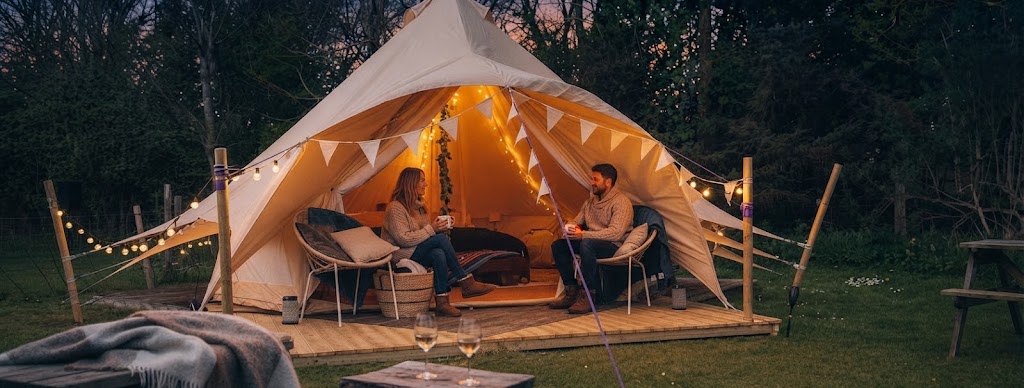
Secluded glamping in North Wales means single units in their own space, not rows of pods. Waenfechan in the Conwy Valley, Brynteg on Anglesey and Benllech-area sites are the recurring names. Snowdonia and the Llŷn Peninsula are the nature on your doorstep. Sustainability credentials tend to be genuine here. Best visited May, June or September.
Discover Glamping Sites in North Wales
Top Glamping Destinations in North Wales
North Wales is the busiest glamping region in the country, which makes finding genuine seclusion within it a slightly counterintuitive exercise. The good news is that the terrain does most of the work — steep valleys, hidden farmland and a coastline with a lot of dead ends mean there are plenty of places to put a single unit where nobody will find it.
Three site names recur when people search for the away-from-it-all end of the market.
Waenfechan Glamping sits in the Conwy Valley near Llanrwst, on a hillside with long views down the valley. It's small — a handful of ensuite pods with kitchenettes and private decking, some with hot tubs — and the spacing is what makes it work. You're not looking at another guest's washing.
Brynteg Glamping is on Anglesey near Benllech, on the island's east coast. Different proposition: beach access, milder weather, and a more family-shaped offer. Seclusion here is relative — it's a proper site rather than a single hidden unit — but Anglesey's rain shadow and gentle terrain make it the comfortable choice. We've reviewed it in full here.
Benllech-area glamping more broadly covers several small operations on Anglesey's east coast, trading on sandy beaches and the Coastal Path.
Secluded Glamping Experiences
What seclusion actually means in practice, and what to check:
- Unit spacing — how far to the nearest other unit, and is there anything between you
- Sightlines — can you be seen from the access track, the car park, or a neighbouring pitch
- Sound — canvas carries everything; timber doesn't. Roads carry further at night than you'd expect.
- Access — a shared track past your door undermines the whole thing
- Site size — under six units is the threshold where a site starts to feel private
The privacy benefits are real and specific. You can use a hot tub without negotiating a towel. You can have a conversation. You can sit outside at eleven at night with a torch off. For couples this is the main reason to pay the £40–£60 premium that secluded units carry.
For a peaceful retreat, valley-floor and woodland sites beat clifftop and open-field ones, because trees and topography block sound as well as sight. Conwy Valley sites tend to score better on this than coastal ones.
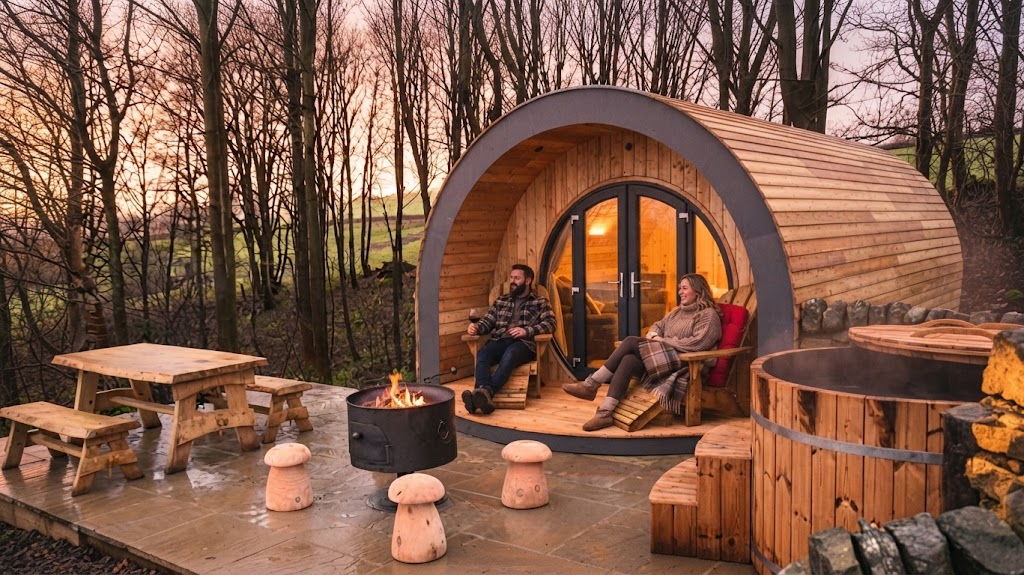
Engage with Nature in North Wales
Nature Activities Near Glamping Sites
Eryri covers 823 square miles and holds nine mountain ranges, over a hundred lakes and the highest peak in Wales and England. For a quiet trip, the trick is avoiding Yr Wyddfa entirely — 600,000 people a year walk it and in summer the paths queue.
Quieter alternatives in the park:
- Cadair Idris — southern Eryri, a better mountain than Snowdon and a fraction of the traffic
- The Rhinogydd — genuinely wild, pathless in places, almost nobody goes
- Llyn Idwal and Cwm Idwal — a flat hour from the road, the first National Nature Reserve in Wales
- Aran Fawddwy — higher than any English peak, and you may see nobody all day
- Gwydir Forest — waterfalls, old mine workings, and forestry track walking from Betws-y-Coed
The Llŷn Peninsula is the other nature asset and the more underrated one. It's an AONB, it's Welsh-speaking, and its coastline — Porthdinllaen, Whistling Sands, Aberdaron, Porth Neigwl — is emptier than anything on the north coast. Bardsey Island off the tip was a pilgrimage destination in the medieval period and still runs boat trips.
Wildlife: choughs on the Llŷn cliffs, seals and porpoises offshore, red kites inland, and pine martens making a slow return to Welsh woodland. Natural Resources Wales manages the reserves and publishes access information.
Sustainable Glamping Practices
Remote sites in North Wales are often off-grid because connecting them would be prohibitively expensive, which turns necessity into a genuine environmental position.
What you'll encounter:
- Solar PV and battery storage — powering lighting and low-draw sockets
- Compost toilets — standard at the more remote sites
- Rainwater harvesting — Wales has no shortage of the raw material
- Spring or borehole water — common in the valleys
- Local coppiced firewood — rather than imported kiln-dried
- Limited unit numbers — some sites run below their planning allowance deliberately
The benefit to guests is indirect but real. Off-grid sites are quieter — no pumps, no compressors, no security lighting. Dark at night means genuinely dark. And a site that limits itself to three units is a site where you'll actually get the solitude you booked.
The cost is convenience. No hairdryer, limited charging, and hot water that depends on the sun or a fire. Decide honestly whether that's a feature or a problem before you book.
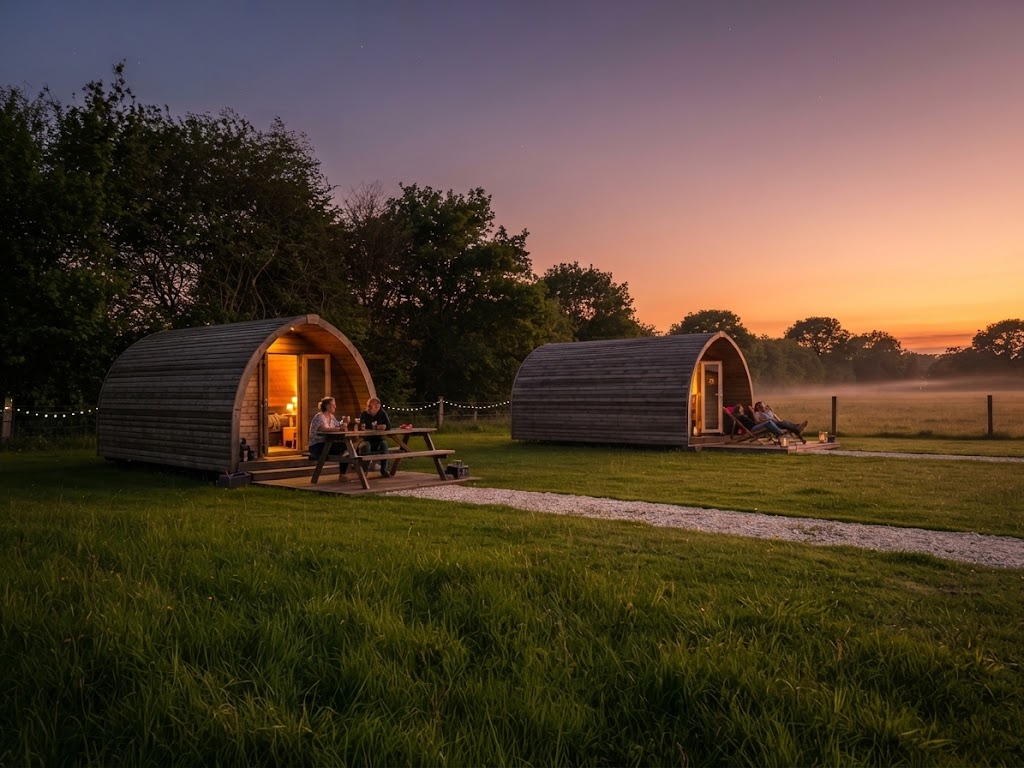
Amenities and Facilities Comparison
Luxury Amenities at Glamping Sites
| Waenfechan (Conwy Valley) | Brynteg (Anglesey) | Benllech area | |
|---|---|---|---|
| Setting | Hillside, valley views | Coastal, near beach | Coastal, east Anglesey |
| Scale | Small, few units | Established site | Mostly small operations |
| Facilities | Ensuite pods, kitchenettes | Modern, family-oriented | Varies widely |
| Hot tubs | Some units | Some units | Some sites |
| Dogs | Designated units | Usually yes | Usually yes |
| Best for | Couples, mountain access | Families, beaches | Beach-first trips |
Comfort and convenience features that matter most on a secluded stay: a kitchenette (you won't want to drive out for dinner), a drying space for wet gear, decent heating, and enough outdoor furniture that you can actually use the space you're paying for.
Proximity to Snowdonia and Llŷn Peninsula
- Waenfechan to Betws-y-Coed — around twenty minutes, putting the eastern Eryri trailheads within easy reach
- Waenfechan to Conwy and the coast — around twenty-five minutes
- Anglesey sites to the Britannia Bridge — twenty-five to forty minutes depending where on the island
- Anglesey to Eryri trailheads — around an hour, so day trips rather than casual visits
- Anywhere on the north coast to the Llŷn — allow ninety minutes to two hours to the far end at Aberdaron
Travel tips: the A55 is fast, everything else isn't. Mountain roads narrow without warning and passing places matter. Fill up before heading inland. And do not trust satnav routing through the Ogwen Valley or over the Crimea Pass in bad weather — both are exposed and both close.
Visitor Experiences and Planning
Visitor Testimonials and Reviews
Feedback for secluded North Wales sites clusters into predictable themes.
What guests consistently praise: the silence, the darkness, the views, hosts who leave you alone, and the feeling of having a landscape to yourself. Several reviews across sites of this type mention sleeping better than they have in months, which is either the fresh air or the absence of streetlights.
Common critiques: access tracks (rough, and hard on a low car), the distance to a shop, no phone signal when you actually needed it, and — at canvas sites — being colder than expected in shoulder season.
The pattern worth noting: complaints about remoteness come almost entirely from guests who booked a remote site and were surprised it was remote. Read the description literally. If a site says "there is nothing within walking distance", believe it.
Best Time to Visit North Wales Glamping Sites
North Wales weather is Atlantic-driven and the mountains catch it first. Parts of Eryri receive over four metres of rain a year. Coastal Anglesey gets under a metre. That's a substantial difference across forty miles.
- May — often the driest month, bluebells in the woods, lambs, long evenings. The best all-round choice.
- June — longest days, good weather, before the school holidays hit
- September — settled weather, sea still warm, paths empty again. Equal best with May.
- July–August — warmest and busiest. Seclusion is harder to find and costs more.
- October — autumn colour in the Gwydir Forest and the Conwy Valley, cheap, atmospheric
- November–March — cheapest, and the mountains become genuinely serious. Pods and cabins only; canvas is shut.
Planning your visit: book May and September at least three months out — those are the months experienced visitors choose. Take waterproofs regardless of forecast. And if the whole point of the trip is solitude, avoid the two May bank holidays and the school holidays entirely.
Frequently asked questions
Where can I find secluded glamping in North Wales?
The Conwy Valley hillsides, the Llŷn Peninsula and inland Anglesey have the most genuinely private units. Look for sites with fewer than six units, and check unit spacing and sightlines rather than trusting the phrase 'secluded' in a listing.
Is off-grid glamping comfortable?
Yes, with caveats. Solar lighting, compost loos and wood-fired water are perfectly workable and make the site quieter and darker. You won't be able to run a hairdryer, and charging is limited — bring a power bank.
What's the best month for a quiet glamping trip in North Wales?
May or September. Both give settled weather, long days and empty paths, and both fall outside the school holidays. Book three months ahead — they're the months regulars choose.
How far is Anglesey glamping from Snowdonia?
About an hour from most of the island to the main Eryri trailheads. Anglesey works well as a milder, drier base with the mountains as a day trip rather than a doorstep.