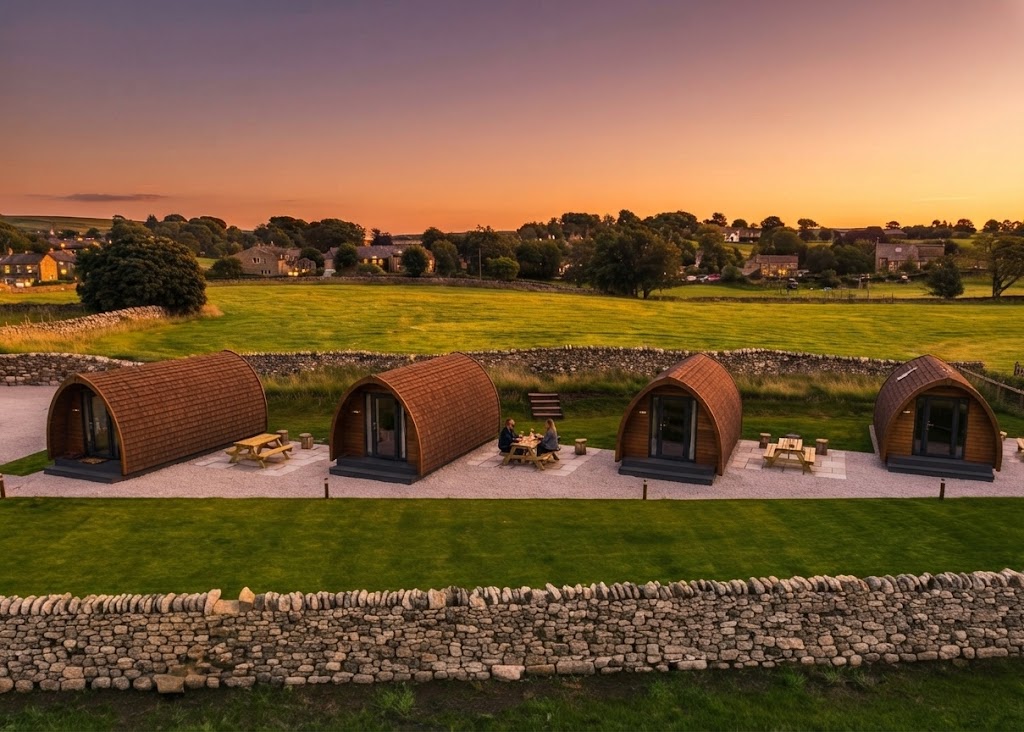
Wales packs three national parks, 870 miles of coast path and roughly 400 glamping sites into an area smaller than Massachusetts. North Wales has the density, Pembrokeshire has the beaches, the Brecon Beacons have the dark skies. Expect £95–£160 a night for a pod, £140–£280 for something with a private hot tub. Book Snowdonia and the coast by February for summer.
Understanding Glamping in Wales
What is Glamping and Why Choose Wales?
Glamping is camping with the bad parts removed. You still sleep in a field. You just do it on a real mattress, under a roof that doesn't flap, with a kettle that works and a bathroom you don't have to walk 200 metres to find in the rain. The word is a portmanteau — glamorous plus camping — and yes, it's a marketing term. It's also a £500m+ UK sector now, so the marketing worked.
Wales is a good fit for a specific reason: the country is small and the scenery changes fast. You can be on a beach in the morning and 900 metres up a mountain by lunch. Three national parks — Eryri (Snowdonia), Bannau Brycheiniog (Brecon Beacons) and the Pembrokeshire Coast — cover roughly a quarter of the land. The Wales Coast Path runs 870 miles around the entire country, which no other nation can claim. Farms here have been diversifying into glamping since the 2008 recession, so the supply is mature. Sites have had fifteen years to figure out what guests want.
Also, honestly, the weather. It rains. A lot. Which is exactly why a pod with underfloor heating beats a tent.
Exploring Popular Glamping Sites
Top Glamping Sites: Nightsky Glamping and More
Nightsky Glamping sits in the Cambrian Mountains, and the name is not decorative — mid Wales holds some of the darkest measured skies in Europe. Their setup is built around it. Roof windows over the beds, no external lighting after 10pm, telescopes on loan. If someone in your group cares about astronomy, this is the booking.
Farm glamping is the other big category, and it's the one people underestimate. A working Welsh farm hosting two or three units gives you something a purpose-built resort never will: lambing season, a farmer who knows which footpath actually connects to which, eggs at the door. Prices tend to run 20–30% below the polished sites. The trade-off is fewer facilities and, sometimes, a walk to the shower block.
Canopy & Stars is the curation layer sitting above all of it. They're a booking platform, part of Sawday's, and they're picky — they reject far more sites than they list. Browsing their Wales collection is a fast way to see the top end of the market without wading through 200 mediocre listings. You'll pay a small premium for that filtering.
| Site type | Typical nightly rate | Best for | Watch out for |
|---|---|---|---|
| Farm glamping | £75–£120 | Families, first-timers, budget | Shared facilities, farm noise at 5am |
| Purpose-built pod site | £95–£160 | Couples, short breaks, winter | Can feel like a car park with pods |
| Safari tent / yurt | £130–£220 | Groups, summer, atmosphere | Seasonal — most close November to March |
| Luxury cabin with hot tub | £180–£320 | Anniversaries, winter escapes | Two-night minimums, deposits |
Family-Friendly Glamping Options
A family-friendly site isn't just one that accepts children. The things that actually matter, in order: a safe enclosed space where kids can be out of sight for ten minutes, a bathroom within thirty seconds of the bed, and something to do when it's chucking it down at 3pm.
- Enclosed grounds — no unfenced water, no farm track running through the middle
- Ensuite or near-suite facilities — nighttime toilet trips with a four-year-old are a genuine planning factor
- Indoor communal space — barn, games room, anything with a roof
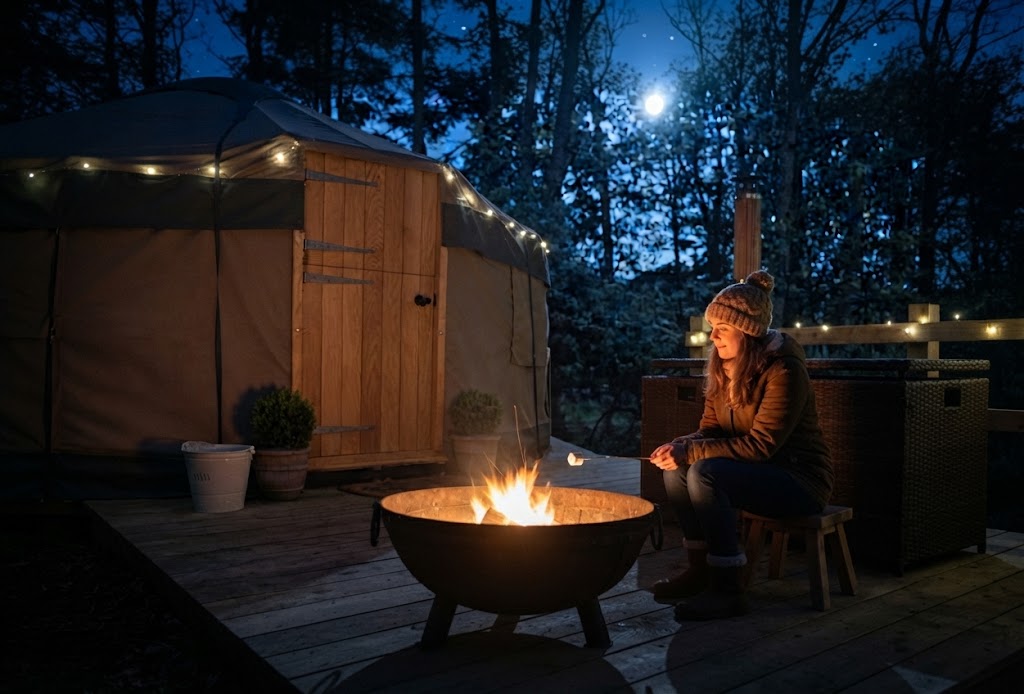
- Fire pit with supplied wood — the single best entertainment system ever invented for children
- Beach or forest within 20 minutes — you will need to burn off energy daily
Safari tents beat pods for families almost every time. More floor space, separate sleeping compartments, an actual table. A pod that sleeps four means four people sleeping four inches apart. Book the tent.
Regional Glamping Highlights
Glamping in North and South Wales
North Wales has the mountains and the volume. Conwy Valley, Llŷn Peninsula, Bala, Llangollen — the density of sites up here is higher than anywhere else in the country, and it's driven by Eryri. Search volume backs it up: North Wales gets more than double the interest of the south. Our North Wales glamping guide breaks the region down valley by valley.
South Wales works differently. It's closer to the M4, closer to Bristol and Cardiff, and the demand pattern is weekend-shaped rather than week-shaped. Brecon Beacons sites fill Friday to Sunday and sit half-empty midweek — which is your discount window. The Gower Peninsula was Britain's first Area of Outstanding Natural Beauty, designated in 1956, and it's the best beach access in the region. Full detail in the South Wales guide.
| North Wales | South Wales | |
|---|---|---|
| Draw | Eryri, Llŷn coast, castles | Brecon Beacons, Gower beaches, Cardiff |
| Drive from Manchester | 1.5–2.5 hrs | 3.5–4.5 hrs |
| Drive from Bristol | 3.5–4 hrs | 1–2 hrs |
| Peak pressure | Brutal, July–August | Weekends year-round |
| Average pod rate | £110 | £100 |
Scenic Glamping Spots: Snowdonia and Brecon Beacons
Eryri National Park covers 823 square miles and contains Yr Wyddfa (Snowdon), at 1,085m the highest peak in Wales. Glamping inside the park boundary is tightly controlled — planning permission is hard to get, which keeps supply low and prices up. Most sites cluster just outside: Betws-y-Coed, Bala, the Conwy Valley. The Snowdonia glamping page covers where to base yourself.
Bannau Brycheiniog — the Brecon Beacons — took a different path. It became an International Dark Sky Reserve in 2013, one of only a handful in the world, and glamping sites here lean into it hard. Waterfall Country around Ystradfellte, the Four Waterfalls Walk, Pen y Fan at 886m. Fewer crowds than Eryri and about 15% cheaper. If you want mountains without the queue for the summit path, come here.
Planning Your Glamping Adventure
Activities to Enjoy While Glamping in Wales
The activity list writes itself, but a few things are worth flagging because people miss them:
- Zip World — Velocity 2 at Penrhyn Quarry is the fastest zip line in the world, 125mph, and it's twenty minutes from a dozen Snowdonia glamping sites
- Coasteering — invented in Pembrokeshire in the 1980s, still best done there
- Castles — Wales has more castles per square mile than any country on earth. Conwy, Caernarfon, Harlech and Beaumaris are a UNESCO World Heritage Site collectively
- Sea kayaking — Anglesey's tidal races are world-class and terrifying in equal measure
- Just walking — the Wales Coast Path is signposted the whole way and most glamping sites sit within a mile of it
One tip nobody gives you: check what's on locally. The National Eisteddfod moves around Wales each August and turns whichever town hosts it into something extraordinary. Book accommodation near it and you'll pay double. Book forty minutes away and you get the festival without the surge pricing.
Comparing Glamping Accommodations
Nightsky, farm stays and Canopy & Stars listings sit at three different points on the same curve. Nightsky sells a specific experience — you're paying for the sky, not the shower pressure. Farm glamping sells value and authenticity. Canopy & Stars sells reliability; you know before you arrive that someone competent has inspected the place.
What actually varies between sites, in rough order of how much it'll affect your stay:
- Bathroom arrangement (ensuite > private-but-separate > shared block)
- Heating (electric underfloor > log burner > oil heater > nothing)
- Cooking (full kitchenette > hob and sink > BBQ only)
- Privacy (own field > hedged pitch > open row)
- Hot tub (private > bookable slot > shared > none)
Pricing tracks that list closely. A pod at £95 will have a shared block and an oil heater. The same pod at £165 has an ensuite, underfloor heating and a hot tub. Decide which two of those five things you care about, then filter.
Booking Your Glamping Experience
How to Book a Glamping Site in Wales
Three routes, and they're not equivalent.
- Direct with the site — cheapest, usually by 10–15%, and you can ask questions. Small Welsh sites answer the phone. Use it.
- Aggregators — Pitchup, Cool Camping, Canopy & Stars. Better for browsing, worse for price. Fine for finding the site, then go direct if the site allows it.
- Airbnb — increasingly where the one-off, weird, brilliant units live. Also where the unregulated ones live. Read every review.
Timing: Welsh school holidays don't align with English ones, which creates gaps. The last week of May and the first week of September are the sweet spots — decent weather, no crowds, 25–40% off peak rates. Snowdonia and Pembrokeshire for July and August need booking in January or February. Everything else you can leave until six weeks out.
Deposit reality check. Most Welsh glamping sites take 25–50% up front and it's non-refundable inside 28 days. A few offer free cancellation. Check before you pay, because "we'll move your dates" is not the same as "we'll refund you" and the weather forecast will tempt you.
Two-night minimums are standard at weekends. One-night stays exist but you'll pay a premium and you'll be limited to midweek. If you specifically want a single night, search the pod glamping page — pods are the format most likely to allow it.
Frequently asked questions
How much does glamping in Wales cost per night?
Budget £75–£120 for a farm pod with shared facilities, £95–£160 for a purpose-built pod with an ensuite, and £180–£320 for a cabin or safari tent with a private hot tub. Prices peak in July and August and drop by roughly a third in October and March.
What is the best time of year to go glamping in Wales?
Late May and early September. You get long days and settled weather without school-holiday pricing. April and October work if you pick a unit with proper heating — Welsh spring is unreliable and the shoulder seasons are where the bargains live.
Do you need planning permission for glamping pods in Wales?
Yes, in most cases. Welsh planning authorities generally treat pods as a material change of use of agricultural land, so a full application is needed. The 28-day permitted development rule that campsites once relied on was tightened, and national park authorities in Eryri and Pembrokeshire are notably strict.
Is glamping in Wales suitable in winter?
Pods and cabins, yes — many stay open year round and winter is when hot tubs make most sense. Yurts, bell tents and safari tents mostly close from November to March because canvas and Welsh gales don't mix.