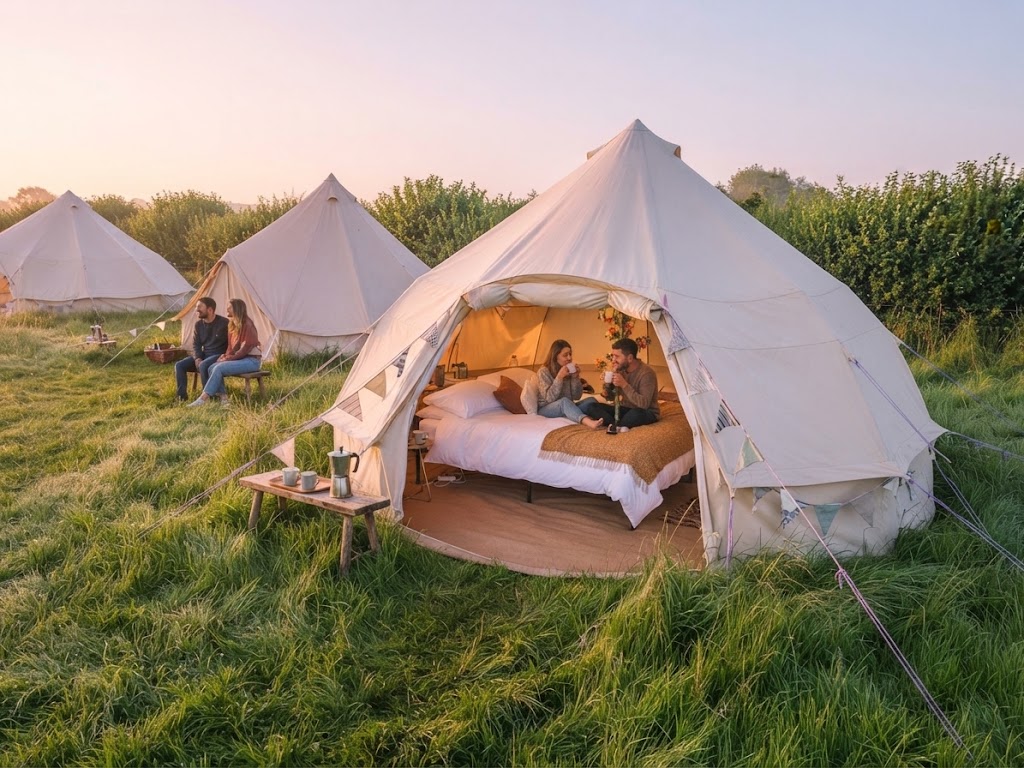
Wales splits neatly into four glamping zones: the north (mountains, highest density), the west coast (Pembrokeshire, best beaches), mid Wales (dark skies, cheapest), and the south (closest to the M4). Pods dominate supply, farm glamping gives the best value, and the Welsh coastline is where the premium sites cluster. Visit Wales lists accredited operators if you want a quality floor.
Exploring Glamping in Wales
Top Glamping Locations in Wales
Wales is 8,000 square miles, which sounds large until you drive it. Cardiff to Holyhead is under five hours. That means your choice of region is really a choice of landscape, not a logistics problem.
- Eryri / Snowdonia — mountains, lakes, the highest concentration of sites. Base yourself in the Conwy Valley or near Bala. Snowdonia detail here.
- Anglesey — 125 miles of coast path, beaches on every side, flat enough to cycle. Sheltered from the worst weather by the mountains. Anglesey guide.
- Pembrokeshire — the only coastal national park in Britain. Puffins, coasteering, and the best beaches in Wales. Pembrokeshire guide.
- Brecon Beacons — dark skies, waterfalls, and the shortest drive from Bristol or Birmingham.
- Gower — Britain's first AONB, twenty minutes from Swansea. Gower guide.
- Mid Wales — Ceredigion, the Cambrians, Machynlleth. Emptiest, cheapest, most underrated.
Accessibility matters more than people plan for. The A55 runs along the north coast and gets you to Anglesey fast. The M4 covers the south. Everything in between is single-carriageway A-roads through mountains, and Google's estimate is optimistic by about 25% if you're behind a tractor. Which you will be.
Types of Glamping Accommodations Available
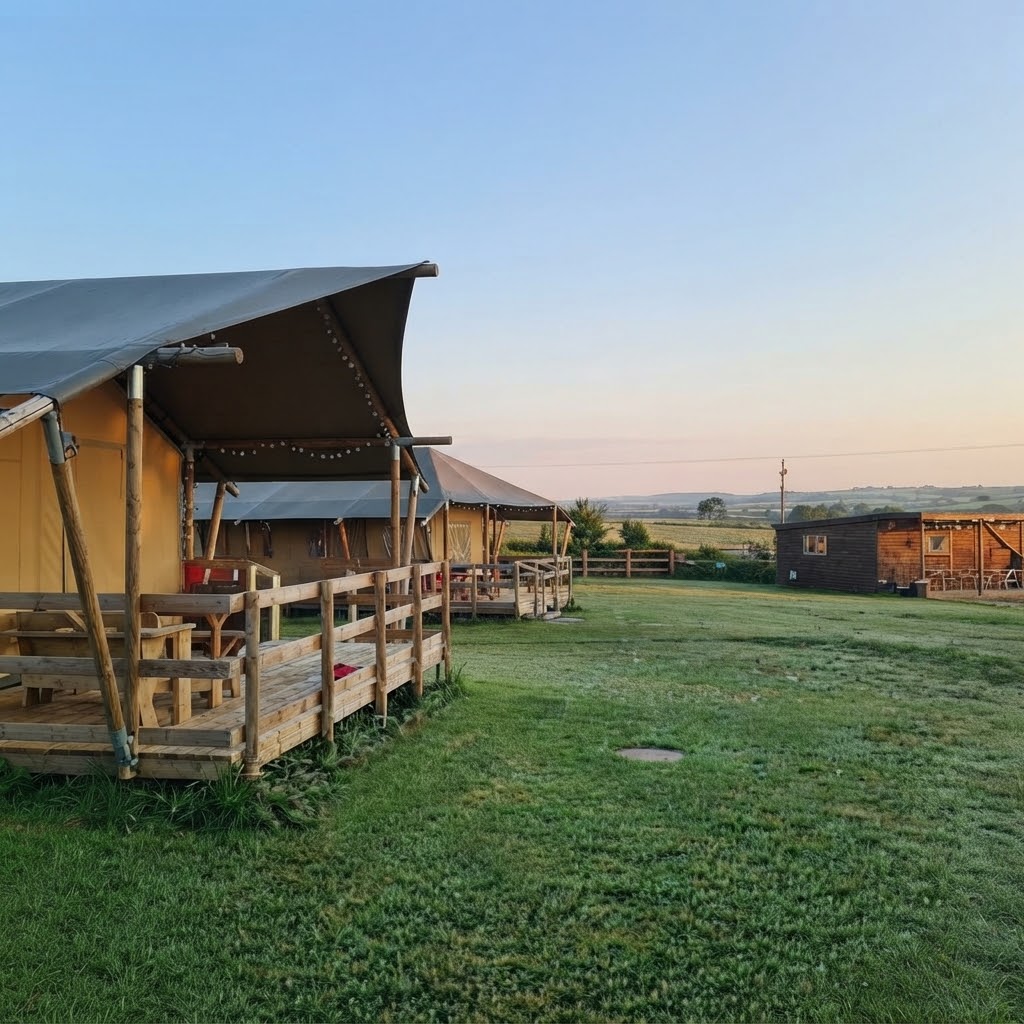
Five formats cover 95% of what's available in Wales.
| Type | Sleeps | Season | Typical rate | Verdict |
|---|---|---|---|---|
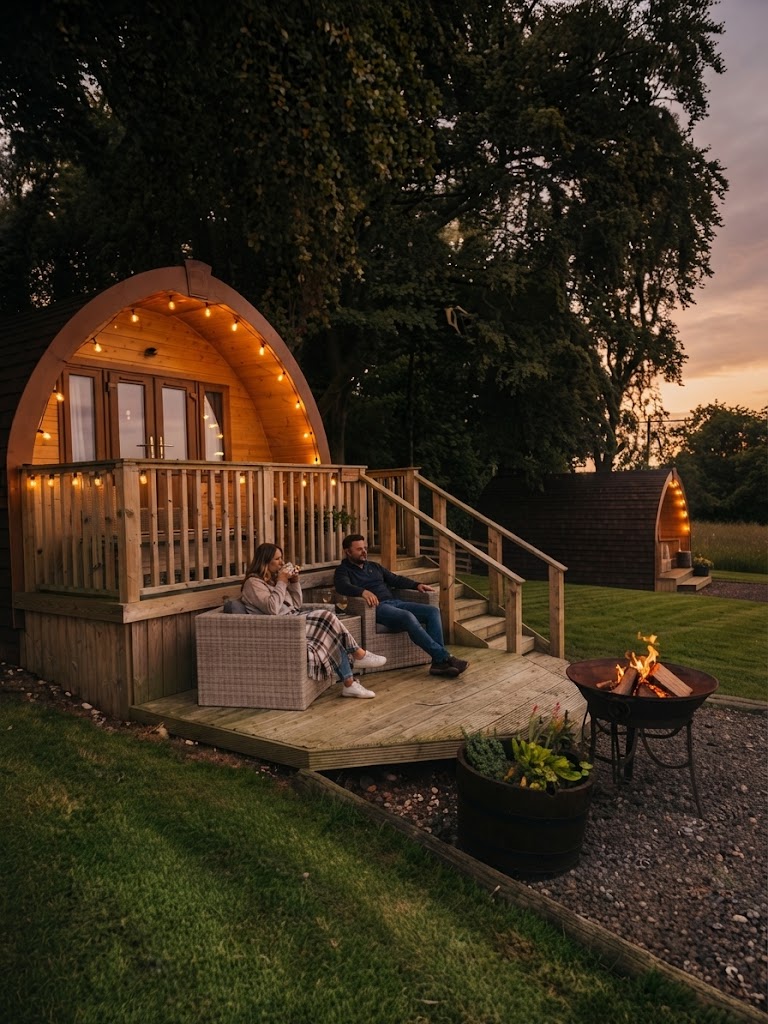
| Glamping pod | 2–4 | Year round | £95–£160 | The default. Warm, dry, slightly cramped. |
| Shepherd's hut | 2 | Year round | £120–£190 | Romantic, characterful, tiny. |
| Safari tent | 4–8 | Apr–Oct | £150–£260 | Best for families and groups. |
| Yurt | 2–6 | Apr–Oct | £110–£200 | Atmospheric. Log burner essential. |
| Cabin / lodge | 2–6 | Year round | £160–£320 | Barely camping. Very comfortable. |
Farm glamping isn't a format, it's a setting — you'll find pods, yurts and huts all sitting on working farms. What it changes is the price and the texture of the stay. Luxury glamping isn't a format either. It's a promise about the bathroom.
Luxury and Unique Glamping Experiences
Luxury Glamping Sites in Wales
The luxury tier in Wales has grown fast. What separates it from mid-range, concretely: private hot tub, ensuite bathroom with mains-pressure hot water, proper kitchen, underfloor heating, a bed you'd recognise from a hotel, and enough land around the unit that you can't see your neighbours. Anything missing more than one of those is mid-range with a luxury price tag.
Expect £200–£350 a night. Two-night minimums are universal at that level, three nights over bank holidays. Our luxury glamping page goes through what's actually worth the premium.
Nightsky Glamping: A Unique Experience
Nightsky Glamping built its offer around a measurable asset. Mid Wales has Bortle Class 2 skies in places — that's the second-darkest classification on a nine-point scale, and it means the Milky Way casts a shadow on a clear moonless night. Very few places in England can claim anything close.
The units have skylights positioned over the beds. There's a no-white-light policy after dark, red torches supplied. In practice this means you'll spend your evening outside doing nothing, staring upwards, which turns out to be the entire point. Reviews consistently mention the same thing: guests arriving sceptical and leaving having bought a star chart.
Book new-moon weeks. Full moon washes out everything and you'll have paid for a sky you can't see.
Regional Glamping Options in Wales
Glamping in North Wales
North Wales is where the market is deepest. Conwy Valley sites give you Bodnant Garden, Betws-y-Coed and the A470 straight into the mountains. The Llŷn Peninsula is quieter, more Welsh-speaking, with better beaches than most people expect — Porthdinllaen and Whistling Sands especially. Llangollen sits on the Dee with a UNESCO-listed aqueduct and a canal you can horse-boat along.
Travel note: the A55 is dual carriageway to Bangor and it's fast. Get off it and you're on the A5 through the Ogwen Valley, which is spectacular and slow. Trains run along the north coast to Holyhead, and the Conwy Valley Line goes inland to Blaenau Ffestiniog — one of the few Welsh glamping regions you can genuinely do car-free.
Glamping in South Wales
South Wales carries the cultural weight. Cardiff has the castle, the Principality Stadium and Cardiff Bay; St Fagans National Museum of History is free and quietly one of the best museums in Britain. The Brecon Beacons sit forty minutes north of the M4. Big Pit at Blaenavon, another UNESCO site, takes you 300 feet underground with an ex-miner as your guide.
Glamping-wise the south is weekend country. Sites near Abergavenny, Crickhowell and the Usk Valley fill fast Friday to Sunday. Midweek availability is good and often discounted. Full south Wales breakdown.
Planning Your Glamping Trip
Glamping Along the Welsh Coastline
The Welsh coastline is the country's headline asset — 870 miles of continuous waymarked path, the first of its kind anywhere. Glamping sites within a mile of it charge a premium and deserve it.
- Pembrokeshire — Barafundle, Broad Haven South, Whitesands. Sites near St Davids and Newgale.
- Anglesey — Rhosneigr for watersports, Benllech for families, Newborough for the forest-and-dunes combination.
- Gower — Rhossili Bay, Three Cliffs, Oxwich. Small sites, huge demand.
- Cardigan Bay — dolphins genuinely visible from shore at New Quay between May and September.
- Llŷn — Aberdaron and Abersoch. The far end feels like an island.
Coastal sites are windier than the photos suggest. Check whether the pitch has a hedge or a windbreak, because a beautiful exposed clifftop pitch in a force 6 is a different holiday entirely.
Booking Your Glamping Experience
Visit Wales runs a statutory grading scheme, and alternative accommodation including glamping is covered by it. A graded site has been physically inspected. It's not a guarantee of a great stay but it's a floor, and for a first booking in an unfamiliar region that floor is worth something.
Practical booking order:
- Pick the region first, based on drive time and landscape
- Filter by accommodation type — this eliminates half the options instantly
- Check the bathroom arrangement before anything else
- Read the three most recent reviews, not the top-rated ones
- Email the site directly with your dates and ask about a direct rate
Deals exist in October, March and midweek year-round. They don't exist in August. Don't waste time hunting for them.
Evaluating Glamping Experiences
Best-Reviewed Glamping Sites in Wales
Reviews for glamping skew positive — people who book a novelty stay want it to be good. So read them for specifics, not sentiment. Useful signals:
- Repeat mentions of the same owner by name (good sign, consistently)
- Complaints about noise from a road or neighbouring pitch (structural, won't be fixed)
- Anything about water pressure, heating or damp (these are the real differentiators)
- Photos uploaded by guests in winter (marketing shots are always August)
Ignore reviews complaining about rain, midges or sheep. That's Wales. It came with the booking.
Frequently asked questions
Where is the best place to go glamping in Wales?
For mountains and site choice, North Wales and Eryri. For beaches, Pembrokeshire or Anglesey. For dark skies and low prices, mid Wales and the Brecon Beacons. For the shortest drive from England's south and west, the Brecon Beacons and Gower.
Can you go glamping in Wales without a car?
Yes, but your options narrow sharply. The north coast rail line to Holyhead and the Conwy Valley branch to Blaenau Ffestiniog serve several sites within taxi distance. Pembrokeshire has coastal bus services in summer. Everywhere else, assume you need a car.
Is glamping in Wales cheaper than a hotel?
Usually, and the gap widens with group size. A safari tent sleeping six at £220 a night beats three hotel rooms comfortably. For two people in October, a pod at £95 and a mid-range hotel room are roughly level.