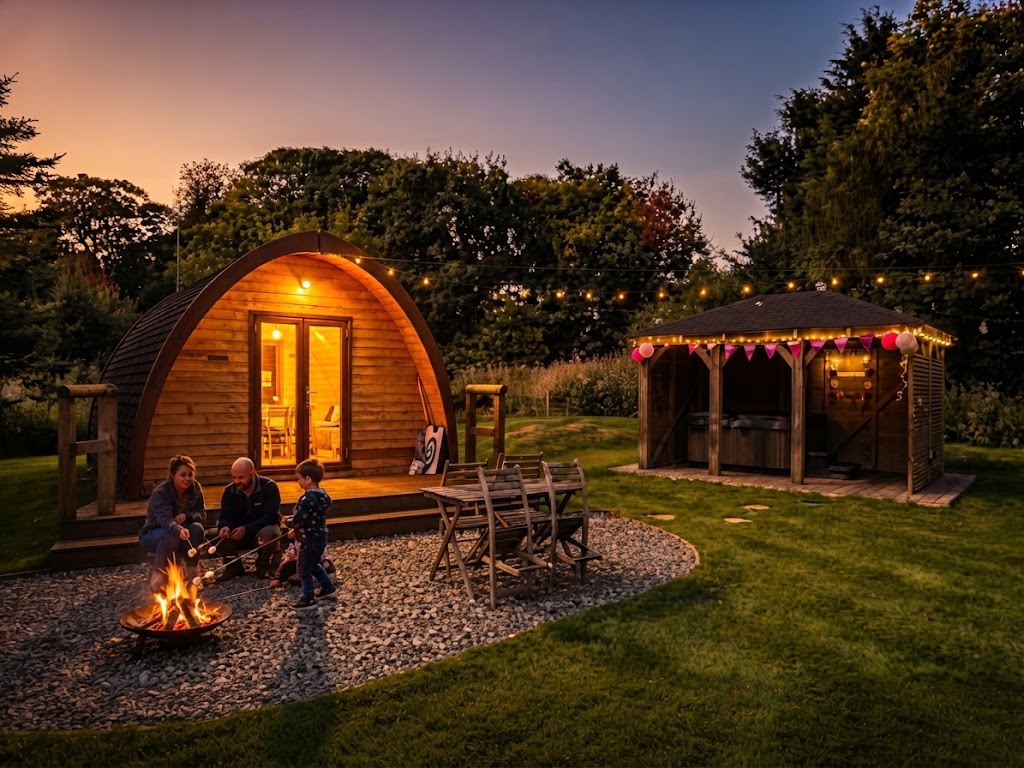
Pembrokeshire is the premium Welsh coastal glamping region — expect £130–£250 a night and book by February for summer. Holly Tree and Watermeadows are the recurring site names; eco credentials here are usually genuine. Skomer Island for puffins (April to July, boats book out), the Coast Path for everything else. Base near St Davids or Newgale for the best beach access.
Exploring Glamping Options in Pembrokeshire
Top Glamping Sites in Pembrokeshire
Pembrokeshire is Britain's only coastal national park — designated in 1952, covering 240 square miles that are almost entirely coastline, islands and estuary. That shape matters for glamping: almost every site is within a few miles of the sea, and the ones that aren't market themselves on being quieter and cheaper.
Two names recur across the region.
Holly Tree Glamping works the comfort-plus-location angle. Well-appointed units, private outdoor space, and positioning that puts beaches and the Coast Path within a short drive. It's the sort of site that suits people who want glamping without roughing it — proper bathrooms, proper kitchens, and enough polish that first-timers aren't put off.
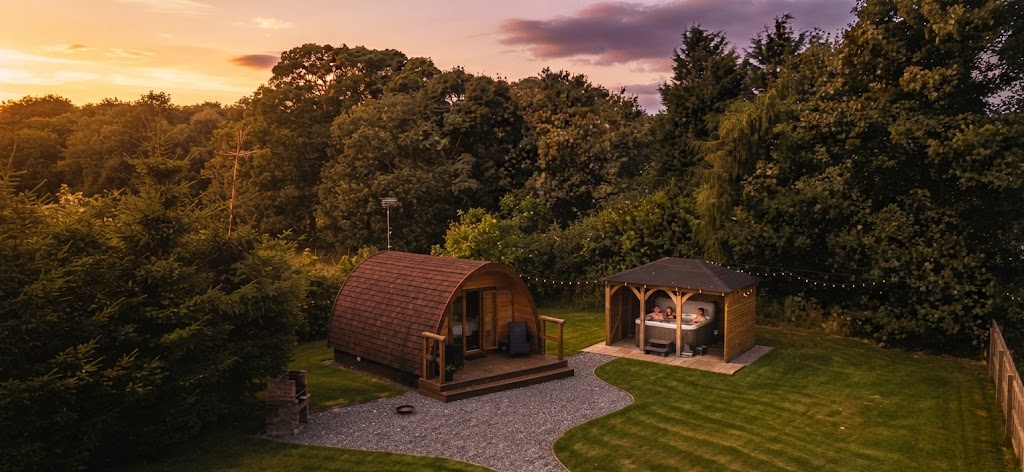
Watermeadows Eco Glamping comes at it differently. The eco framing is structural rather than decorative: low-impact units, solar power, careful water use, and a site laid out to protect the meadow it sits on rather than maximise pitch count. Guests who book it tend to be booking the philosophy as much as the accommodation.
Beyond those, the region's sites cluster around St Davids, Newgale and Solva in the north, Tenby and Saundersfoot in the south, and inland around Narberth where prices drop noticeably.
Comparing Amenities at Pembrokeshire Glamping Sites
| Amenity | Standard site | Luxury site | Eco site |
|---|---|---|---|
| Bathroom | Shared block | Ensuite, mains pressure | Compost loo, solar shower |
| Power | Mains electric | Mains, USB, Wi-Fi | Solar, limited or none |
| Heating | Electric panel | Underfloor plus log burner | Wood burner only |
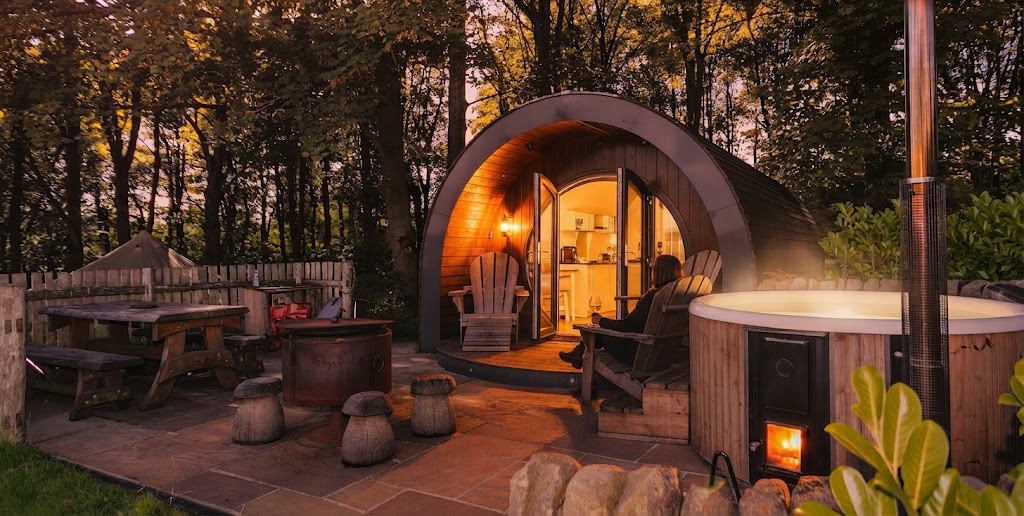
| Hot tub | Sometimes shared | Private, often wood-fired | Wood-fired if at all |
| Rate | £110–£150 | £190–£280 | £120–£180 |
Family and pet policies: most Pembrokeshire sites take both, but eco sites with compost loos and no electricity are a harder sell with small children. Dogs are widely accepted at £10–£15 a stay. Beach restrictions apply between May and September on the busier beaches — Whitesands, Tenby and Saundersfoot all have seasonal bans, while Newgale, Freshwater West and Barafundle stay open.
Discovering Pembrokeshire's Natural Attractions
Exploring the Pembrokeshire Coast
The Pembrokeshire Coast is the reason the national park exists. Volcanic and sedimentary rock, folded and fractured, cut into cliffs, stacks, arches and about fifty beaches. The water is clearer than anywhere else in Wales because there's no significant river silt on most of the coast.
Beaches worth the drive:
- Barafundle Bay — half a mile walk from Stackpole Quay, no facilities, regularly called one of the best beaches in the world. The walk is why it stays empty-ish.
- Broad Haven South — dunes, a lily pond behind it, Church Rock offshore
- Whitesands — surf, lifeguards, near St Davids
- Newgale — two miles of sand and a pebble bank, brilliant in a storm
- Freshwater West — the wild one. Filming location for Harry Potter and Robin Hood. Dangerous for swimming, superb for surfing and looking at.
Activities in the park: coasteering (invented here, in the 1980s, at St Davids), sea kayaking, surfing, rock climbing on the limestone at Stackpole, and boat trips to the islands. The national park authority publishes tide-safe route advice and it's worth reading before any clifftop or beach walk.
For photography: St Govan's Chapel wedged in a cliff, the Green Bridge of Wales arch, Stackpole's lily ponds, and the whole stretch between Solva and St Davids at sunset.
Wildlife Adventures on Skomer Island
Skomer sits off the Marloes Peninsula and holds one of the most important seabird colonies in southern Britain. The headline species is the Atlantic puffin — around 40,000 of them breed here — but the island's real distinction is its Manx shearwater colony, which is the largest in the world at roughly 350,000 pairs.
- Puffins — April to late July. Peak viewing is June, when chicks are being fed and adults are flying in constantly with sandeels.
- Manx shearwaters — only come ashore at night. Overnight stays on the island let you experience this, and they book out a year ahead.
- Seals — grey seal pups on the beaches from late August into October
- Short-eared owls, razorbills, guillemots, kittiwakes — all present in season
Practicalities: boats leave from Martin's Haven, run by Pembrokeshire Islands Boat Trips, and landing tickets must be booked in advance through Wildlife Trust of South and West Wales. Sailings are weather-dependent and get cancelled regularly. There's a landing fee on top of the boat fare. No dogs. Take food and water — there's no shop.
If Skomer's booked, Skokholm and Ramsey Island are alternatives, and boat trips around Grassholm's gannet colony run without landing.
Planning Your Glamping Trip
Accessibility and Location of Glamping Sites
Pembrokeshire is a long way from most of Britain and there's no motorway. That's part of why it stays good.
- By car — M4 to Carmarthen, then A40 and A477 or A487. Bristol is three hours, Birmingham four, London five.
- By train — direct services from Cardiff and London to Haverfordwest, Tenby and Pembroke Dock
- Coastal buses — the Puffin Shuttle, Strumble Shuttle and Coastal Cruiser run along the coast in season and connect Coast Path sections. Genuinely useful for linear walks.
- Ferries — Pembroke Dock and Fishguard both run to Ireland
The Pembrokeshire Coast Path runs 186 miles from Amroth to St Dogmaels and forms part of the Wales Coast Path. Its total ascent is roughly equivalent to Everest, which people discover on day two. Glamping sites within a mile of the path advertise it, and it's a genuine advantage — you can walk a section and bus back.
Accessibility on site: coastal sites are frequently on clifftop slopes with grass access. If mobility is a factor, filter for hardstanding pitches and ask about the distance and surface from parking to unit.
Pricing and Booking Your Glamping Experience
| Period | Pod / standard | Safari tent | Luxury with hot tub |
|---|---|---|---|
| March–April | £110 | £150 | £190 |
| May–June | £130 | £185 | £225 |
| July–August | £165 | £250 | £300 |
| September | £125 | £175 | £215 |
| October | £105 | £145 | £185 |
Booking timeline: summer weekends need January or February. This is the region where late booking fails most reliably — Pembrokeshire's supply is capped by national park planning and demand comes from three countries.
Special offers to look for: shoulder-season three-for-two deals, Coast Path walker rates at sites that cater to them, and midweek discounts in June which are frequently better value than October weekends.
Making the Most of Your Glamping Experience
Best Times to Visit Pembrokeshire for Glamping
Pembrokeshire has the mildest winters in Wales — the Atlantic keeps frost rare — and cool, changeable summers. Average July high is around 19°C, which is not a Mediterranean holiday and never pretends to be.
- April–May — wildflowers on the cliffs, puffins arriving, sites quiet and cheap. Best value of the year.
- June — long days, puffin peak, before the school rush. The best month, if you can get in.
- July–August — warmest sea, busiest everything, highest prices
- September — warm water, empty beaches, seal pups arriving. Strong second choice.
- October onwards — canvas sites close, weather turns, but pods and cabins stay open and the coast in a storm is spectacular
Events worth planning around or avoiding: the Really Wild Food Festival at St Davids, Tenby's Ironman weekend in September (accommodation for thirty miles disappears), and Narberth's food festival.
Visitor Reviews and Experiences
Common praise for Pembrokeshire sites: the coastal setting, dark skies (the park is a Dark Sky Reserve too), owners who know the tide tables and the good beaches, and the sheer quality of the walking from the gate.
Common complaints: wind (clifftop sites are exposed and canvas can be noisy), the drive, and the price. All three are structural. Wind is the one to actually plan around — ask whether the pitch has shelter, because a westerly on an exposed clifftop is relentless.
Tips that keep coming up from past visitors: take the coastal bus for one-way walks, book Skomer before you book anything else, and don't underestimate how much of your time will go on driving between beaches. Pick a base and stay local.
Frequently asked questions
When should I book Pembrokeshire glamping for the summer?
January or February for July and August. National park planning limits new sites, so supply barely grows while demand does. Late booking works in April, May and October, and almost never in high summer.
Can you see puffins from Pembrokeshire glamping sites?
Not from the sites themselves — you need a boat to Skomer, which runs from Martin's Haven between April and July. Landing tickets are booked in advance and sailings are weather-dependent, so build in a spare day.
Is Pembrokeshire glamping expensive?
It's the most expensive coastal region in Wales, roughly 15–20% above the national average. £130–£165 for a standard unit in summer, £250–£300 for luxury with a hot tub. Inland sites near Narberth cut that noticeably.
Are Pembrokeshire glamping sites near the Coast Path?
Many are within a mile of it, and they'll say so in the listing. Combined with the seasonal coastal bus services, this makes Pembrokeshire the best region in Wales for walking a linear route and returning to the same pitch each night.