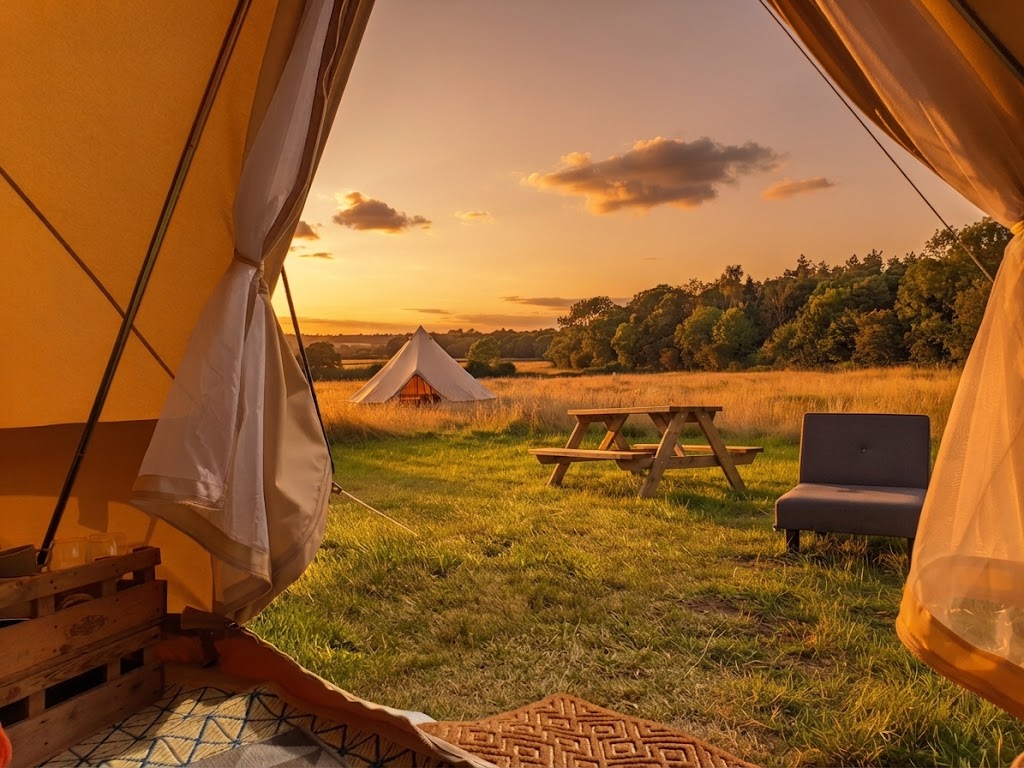
Anglesey (Ynys Môn) is flatter, drier and sunnier than mainland Eryri, with beaches on every side. Brynteg is the best-known site; Beaumaris suits history, Rhosneigr suits watersports. Yurts and safari tents are the signature units. Budget £120–£220. The 125-mile Coastal Path is the reason to base yourself near it. Book by March for summer.
Introduction to Glamping in Anglesey
What is Glamping?
Glamping is outdoor accommodation with the discomfort designed out. A yurt with a wood burner, a safari tent with a real kitchen, a pod with underfloor heating. You're in a field; you're not suffering in one.
Anglesey suits it particularly well for a reason people don't expect: the weather. The island sits in the rain shadow of Eryri, so it receives roughly half the rainfall of the mountains twenty miles away — around 850mm a year against 3,000mm-plus in the hills. It's also one of the sunnier parts of Wales. Canvas accommodation, which struggles in the mountains, works here.
The variety on offer runs from simple bell tents through yurts and safari tents to luxury pods and cabins with hot tubs. The island's small enough that all of it is within forty minutes of everything else.
Top Glamping Locations in Anglesey
- Benllech and the east coast — sandy family beaches, calm water, the highest concentration of sites. Brynteg sits here.
- Beaumaris — the historic corner. Castle, Georgian seafront, views across the Menai Strait to the mountains.
- Rhosneigr — west coast, windsurfing and kitesurfing capital of the island, younger crowd
- Newborough — forest, enormous dunes, and Llanddwyn Island. The best single location on Anglesey.
- Cemaes and the north — quietest, most rugged coast, closest to South Stack
- Trearddur Bay — Holy Island, rocky coves, coastal walking
Proximity to attractions is essentially a non-issue. The island is 276 square miles, and you can cross it in forty minutes. Pick a coast — east for calm and families, west for surf and drama.
Luxury Glamping Options
Experience Luxury Glamping in Anglesey
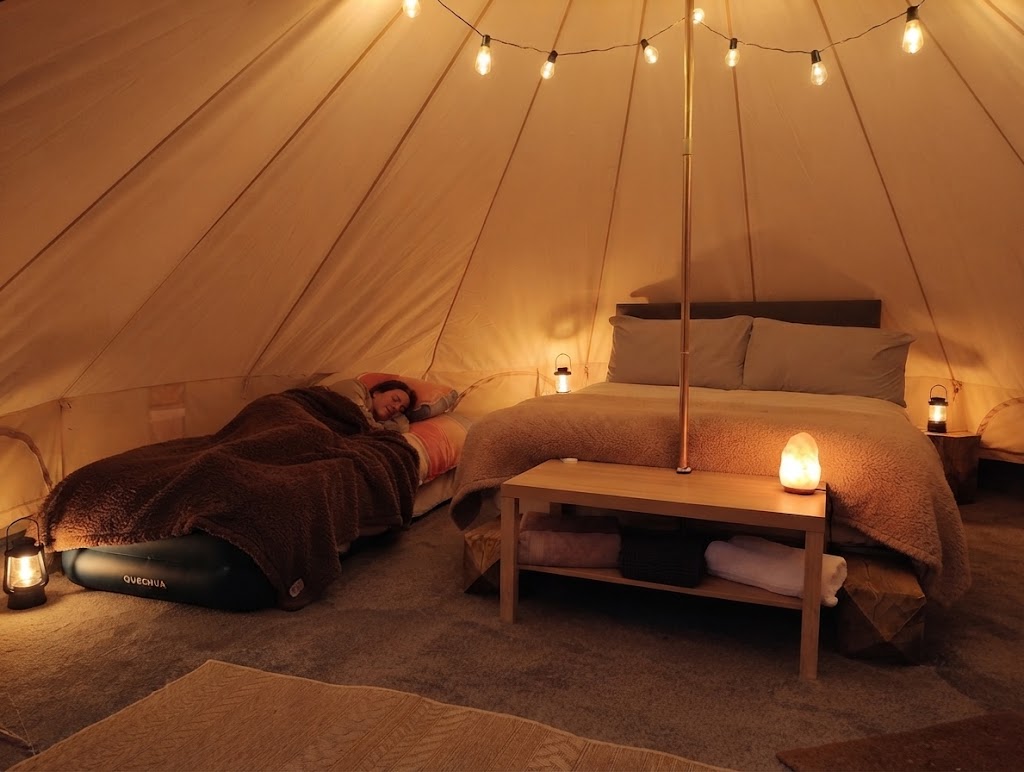
Luxury on Anglesey means the standard package with a sea view attached: private hot tub, ensuite with mains pressure, full kitchen, log burner, decking, and separation from neighbours. Sea-view pitches carry a 20–25% premium and, on this island, they're often worth it — you're looking across at Eryri from the east coast, or at open Irish Sea from the west.
Rates: £180–£280 for luxury units in season. Amenities that recur at the top end — robes and towels for the tub, firewood included, welcome hampers with Menai mussels or Halen Môn sea salt (made on the island, and genuinely excellent), and bike storage.
Anglesey's luxury providers tend to be small operations of two to six units rather than large parks. That's a function of planning on an island where much of the coast is an AONB.
Exploring Specific Glamping Sites
Brynteg Glamping: A Unique Experience
Brynteg is the Anglesey glamping name with the widest recognition. It sits near Benllech on the island's east coast, and the combination it offers — beach access, comfortable units, family-appropriate facilities — is what puts it at the top of most searches.
Accommodation covers glamping units with proper beds, private outdoor space and modern facilities. Some units include hot tubs. The site is set up for families rather than being merely tolerant of them.
Guest feedback: the beach proximity, the standard of the accommodation, and the general ease of the place. Criticism is limited and mostly relates to peak-season busyness and price. We've written a fuller Brynteg Glamping review covering location, facilities and booking.
Beaumaris and Rhosneigr Glamping
| Beaumaris | Rhosneigr | |
|---|---|---|
| Coast | East, sheltered Menai Strait | West, open Irish Sea |
| Character | Historic, genteel, Georgian | Sporty, windswept, surf town |
| Best for | Castles, sailing, views of Eryri | Kitesurfing, windsurfing, beach days |
| Water | Calm, tidal, cold | Waves, strong currents, surfable |
| Eating | Good pubs and restaurants | Beach cafés, a couple of very good places |
Beaumaris has the castle — the last and largest of Edward I's Welsh fortresses, never finished, and considered the most technically perfect concentric castle design in Britain. It's a UNESCO World Heritage Site along with Conwy, Caernarfon and Harlech. The town also has a Victorian gaol and a courthouse you can tour, plus boat trips to Puffin Island.
Rhosneigr is a different island entirely. Broad west-facing beaches, consistent wind, and one of the best kitesurfing spots in the UK. There's a small centre with good food and a strong summer crowd. Downside: RAF Valley is next door and the Hawk jets are loud.
Types of Glamping Accommodations
Yurts: Traditional Meets Modern
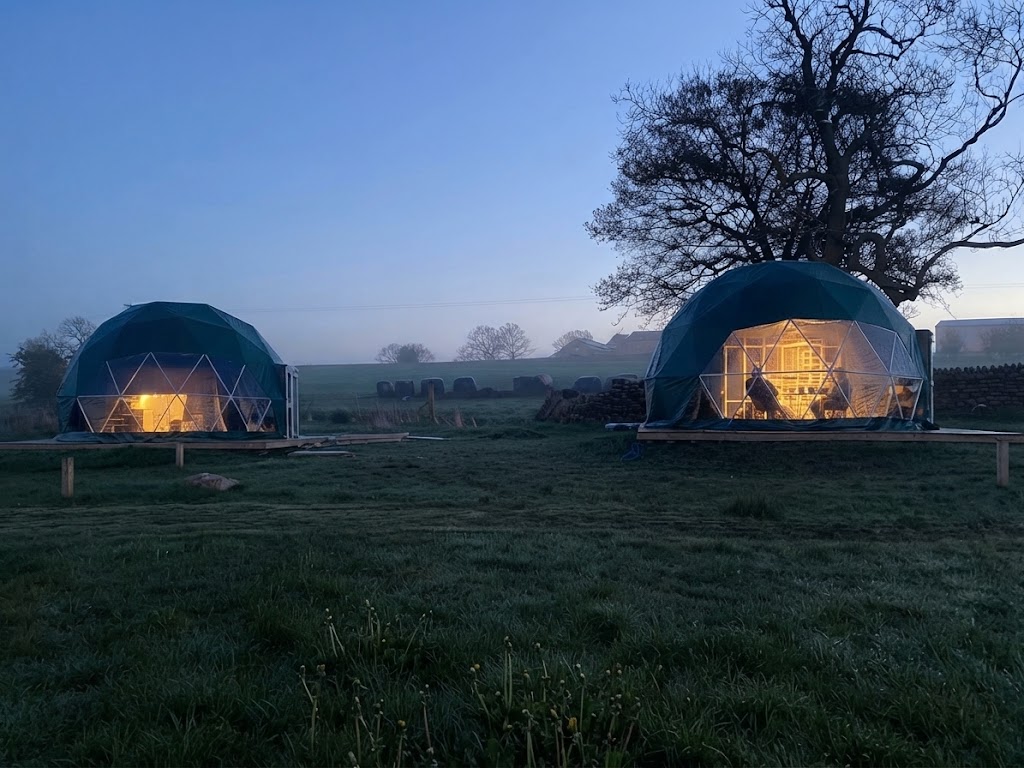
A yurt is a circular tent on a wooden lattice frame with a central crown wheel, developed by Central Asian nomads and essentially unchanged in three thousand years. The structure handles wind better than any rectangular tent because there's no flat face for a gale to push on — relevant on an Anglesey coast that gets plenty of both.
Inside a Welsh yurt: wooden floor, rugs, a proper double bed, a wood burner with a flue through the wall, and usually a clear dome in the crown so you can see the sky from bed. Some have electric light, many run on candles and solar lanterns. Cooking is typically outside or in a shared kitchen.
Anglesey yurt sites sit mostly on the east and north coasts. Season is April to October. Expect £120–£190. The experience is atmospheric and slightly rough at the edges, which is the point — if you want a hotel room in a field, book a cabin.
Safari Tents: Adventure Awaits
The safari tent is the family unit. Big — often 50 square metres — with a timber floor, canvas and mesh walls, two or three separate bedrooms, a kitchen with a gas range and fridge, a wood burner, and a covered veranda.
What makes it work on Anglesey: families need separate bedrooms, the veranda extends living space outdoors, and the island's milder weather means you'll actually use it. Safari tents here are commonly found near Benllech, Moelfre and the eastern beaches.
£170–£260 in season, April to October. Sleeps four to eight comfortably. If there are more than two of you, this is the unit to book.
Glamping Near Anglesey Coastal Path
Stay Close to Nature: Glamping Near the Coastal Path
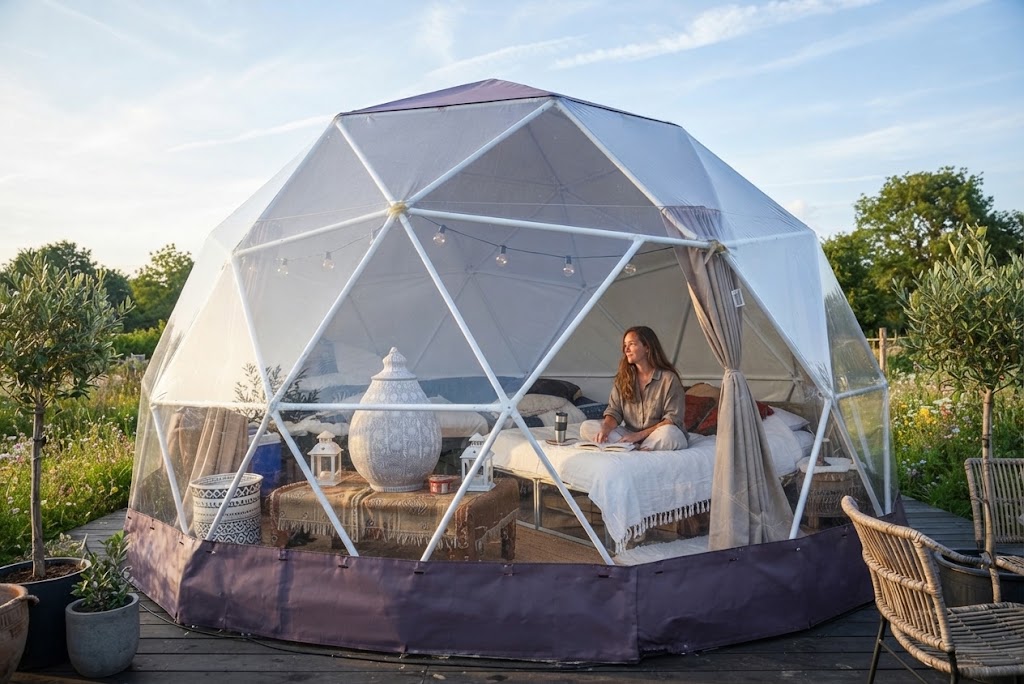
The Anglesey Coastal Path runs 125 miles around the entire island and forms part of the Wales Coast Path. Roughly 95% of it lies within the Anglesey Area of Outstanding Natural Beauty. It's waymarked throughout, mostly easy walking, and it's the single best reason to stay on the island.
Highlights along the route:
- South Stack — lighthouse on a rock stack, 400 steps down, RSPB reserve with guillemots, razorbills and puffins in season
- Llanddwyn Island — tidal island off Newborough beach, ruined church, two lighthouses, the story of Dwynwen the Welsh patron saint of lovers
- Newborough Forest — Corsican pine planted to stabilise the dunes, red squirrels, and a red squirrel population that's actually thriving
- Moelfre — lifeboat station, the Royal Charter wreck site, seals
- Penmon Point — Trwyn Du lighthouse, views to Puffin Island, one of the great picnic spots in Wales
Sites within a mile of the path are common and advertise it. Because the island is a loop, you can walk a section and get a bus or taxi back rather than doubling.
Booking and Comparing Glamping Sites
Compare Prices and Amenities
| Unit | Shoulder | Peak | Season |
|---|---|---|---|
| Bell tent | £90 | £140 | May–Sep |
| Yurt | £120 | £190 | Apr–Oct |
| Safari tent | £175 | £260 | Apr–Oct |
| Pod | £110 | £165 | All year |
| Luxury with hot tub | £185 | £280 | All year |
Choosing: two people wanting atmosphere take the yurt. A family takes the safari tent. Anyone visiting between November and March takes a pod or cabin, because everything canvas is shut. Sea view adds a fifth to the price and is worth it on the east coast where you're looking at mountains.
How to Book Your Glamping Experience
- Pick a coast — east for calm and families, west for surf and space
- Check availability from January for July and August; March is fine for shoulder season
- Search platforms for breadth, then contact the site direct for a better rate
- Ask about wind exposure and hedging on the specific pitch
- Confirm season dates — canvas sites close earlier than their websites sometimes suggest
Best deals: midweek in June, and the two weeks after the August bank holiday when the island empties and the sea is at its warmest. Avoid the Anglesey Show week in August unless that's why you're coming — accommodation across the island tightens.
Frequently asked questions
Is Anglesey good for glamping?
Very. It gets roughly half the rainfall of the Eryri mountains twenty miles away, it's flat enough to cycle, and there are beaches on all four coasts. Canvas accommodation works here in a way it doesn't in the mountains.
Are glamping pods on Anglesey dog friendly?
Most sites accept dogs in designated units for £10–£15 per stay. Anglesey has good dog beaches out of season, but several of the popular ones — Benllech, Trearddur Bay — restrict dogs between May and September. Check before you book.
What's the best area on Anglesey for glamping?
Benllech and the east coast for families and calm beaches. Rhosneigr for watersports. Newborough for the forest, dunes and Llanddwyn Island. Beaumaris if you want the castle and views across to Eryri.
Can you walk the Anglesey Coastal Path from glamping sites?
Yes — the path circles the whole island and most sites are within a mile of it. Because it's a loop with bus links, you can walk a linear section and get transport back rather than retracing your steps.