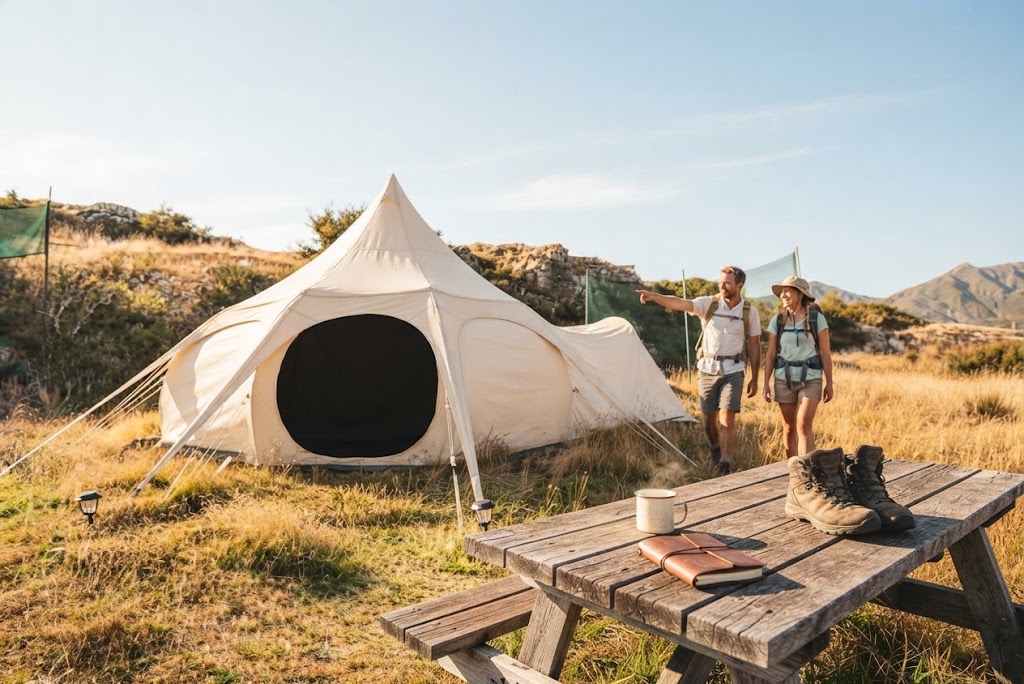
Pods are Wales's default glamping unit: insulated timber, year-round, £95–£175 a night. Mid Wales is cheapest and darkest, South Wales is closest to the M4, Cwmcarn Forest is the best-known site in the valleys. Luxury pods add ensuites, kitchens and hot tubs for around £55 more. Stargazing is a genuine reason to choose Wales over England for this.
Understanding Pod Glamping in Wales
What is Pod Glamping in Wales?
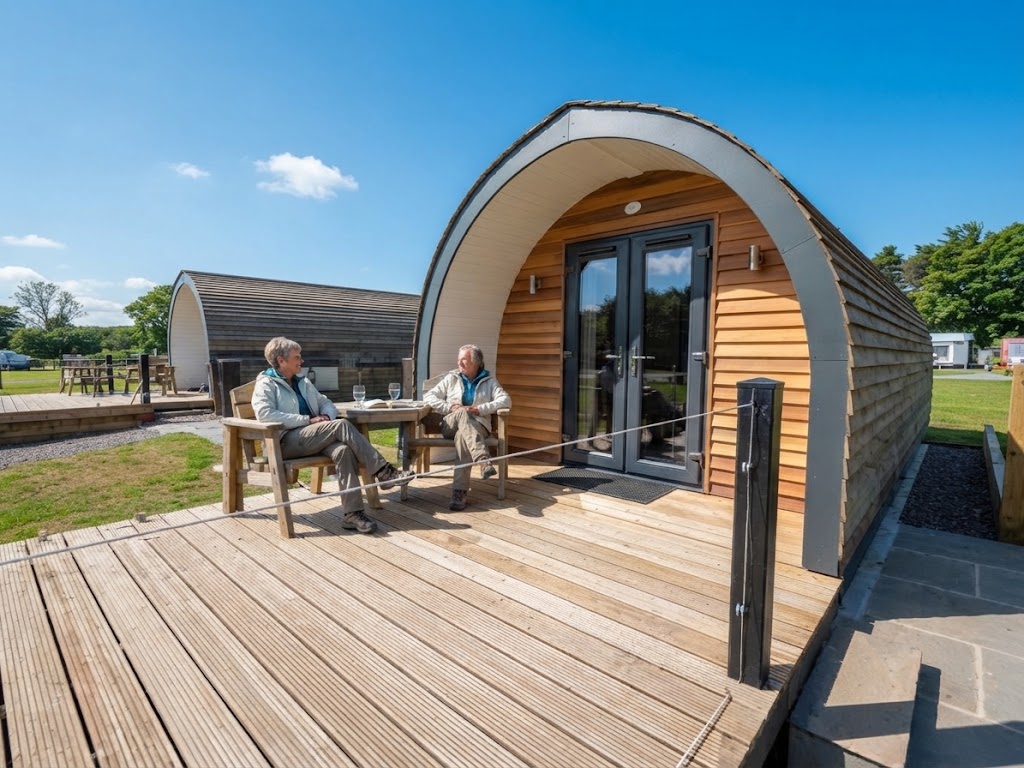
A glamping pod is a small insulated timber building, usually curved or apex-roofed, typically 3 by 5 metres, sleeping two to four. Doors at one end, windows, electric heating, a real bed. Some have bathrooms and kitchens; the basic ones have a kettle and a socket.
The format arrived in the UK around 2010 from Scandinavian camping cabins and it took over. In Wales it's now the most common glamping unit by a wide margin, because it solves the specific Welsh problem: weather. Canvas is a gamble from October to April in a country where parts of the mountains get four metres of rain a year. Insulated timber isn't.
Why Wales specifically: three national parks, five AONBs, 870 miles of coast path, and a farming sector that diversified into tourism early. There's a pod within twenty minutes of almost anywhere worth going.
Features that define a good one: insulation you can feel, thermostatic heating rather than a plug-in heater, a covered entrance so you're not soaked getting the key in, and decking so the outside space is usable when the grass isn't.
Exploring Glamping Locations in Wales
Top Regions for Pod Glamping
Mid Wales is the region people skip and shouldn't. Ceredigion, Powys, the Cambrian Mountains, the Elan Valley. It's the emptiest part of the country — Powys has a population density of about 26 people per square kilometre, roughly a tenth of the Welsh average — and pod rates run 20–25% below the national parks. The Elan Valley reservoirs, Devil's Bridge, the Cambrian Way, and red kites, which were reintroduced here and are now everywhere.
South Wales has the density and the access. Sites through the valleys, the Brecon Beacons fringe, the Vale of Glamorgan and the Wye. You're an hour from Bristol, ninety minutes from Birmingham. Popular pod locations include Cwmcarn, the Usk Valley, and the country parks around Merthyr and Blaenavon.
The diversity of landscape across Wales in a small area is the underrated part. From a mid Wales pod you can reach mountain, reservoir, forest and coast inside an hour. Full regional coverage on our main Wales guide.
Cwmcarn Forest Campsite: A Glamping Gem
Cwmcarn Forest sits in the Ebbw Valley in Caerphilly, about twenty minutes north of Newport, and it's the best-known pod location in South Wales. The site is run within the forest itself, alongside the Forest Drive and the trail network.
Amenities: camping pods with heating and lighting, alongside traditional camping and caravan pitches. Shower and toilet blocks, a visitor centre, café and bike hire. Being a Natural Resources Wales forest site means the infrastructure is decent and the trails start at the door.
The appeal of a camping pod here is specific — you're in the trees, you're twenty minutes from the M4, and the Twrch and Cafall mountain bike trails are among the best in South Wales. The Forest Drive reopened after a long closure caused by larch disease, and it's a seven-mile scenic loop with viewpoints over the valley.
Booking: Cwmcarn is popular and weekends fill in summer. Midweek is usually available. Rates sit at the lower end — this is a value option rather than a luxury one, and it's the better for it.
Luxury Pod Glamping Options
Discovering Luxury Pods in Wales
"Luxury pod" gets used loosely. What it should mean, concretely:
- Ensuite bathroom — inside the pod, with a real shower and mains-pressure hot water
- Full kitchenette — hob, sink, fridge, microwave, crockery, pans
- Underfloor heating — thermostatic, not a panel heater bolted to the wall
- Quality bed — a proper mattress, not a foam slab on a plinth
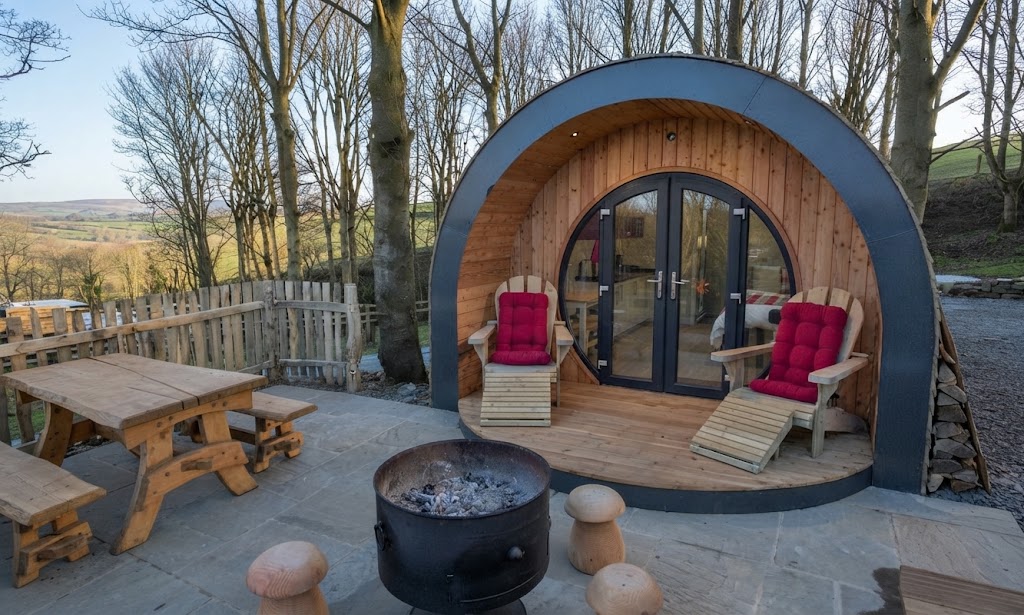
- Private outdoor space — decking with furniture, screened from neighbours
- Space — 20 square metres plus, rather than 15
The benefit over a standard pod isn't luxury for its own sake. It's that a standard pod is fine for one night and cramped for three. Once you're staying longer, the kitchen and the bathroom stop being nice-to-haves. Expect to pay £145–£200 against £95–£130.
Pods with Hot Tubs and More
Hot tub pods are the most requested and least available units in Wales. The premium is £40–£70 a night and demand outstrips supply everywhere.
Other amenities that meaningfully change a pod stay: a log burner (atmosphere, and dries wet clothes), a fire pit with wood included, a BBQ, and outdoor lighting on a switch you can reach from bed. Wi-Fi appears at maybe half of Welsh pod sites and is unreliable at most of them.
Detail on hot tub pods specifically is on our pods with hot tubs page, and the North Wales-focused version is here.
Unique Experiences During Pod Glamping
Stargazing in the Welsh Countryside
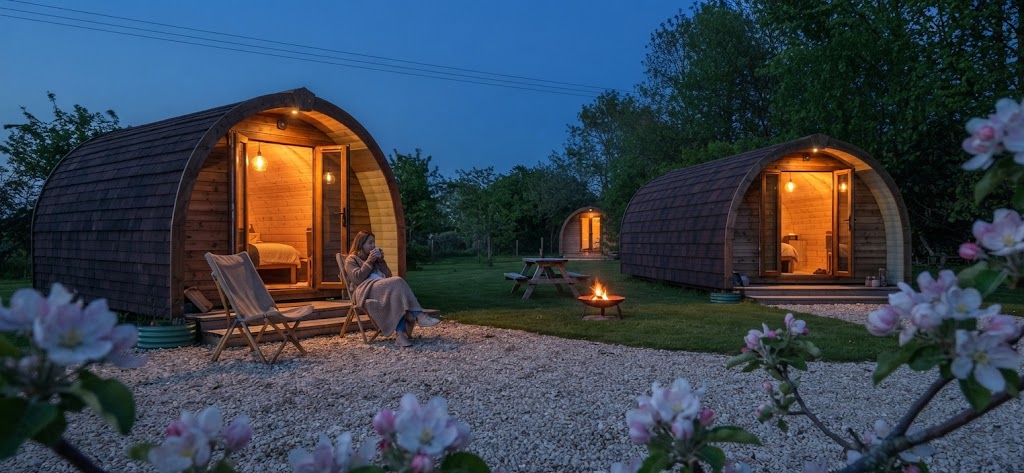
This is the genuine differentiator, and most people don't know about it. Wales has an extraordinary concentration of protected dark sky areas for its size:
- Bannau Brycheiniog (Brecon Beacons) — International Dark Sky Reserve since 2013
- Eryri (Snowdonia) — International Dark Sky Reserve since 2015
- Elan Valley — International Dark Sky Park
- Pembrokeshire Coast — Dark Sky Reserve
- Cambrian Mountains — some of the darkest measured skies in Europe, Bortle Class 2 in places
What that means practically: on a clear moonless night in mid Wales you can see the Milky Way as a distinct structured band, not a faint smudge. Around 2,000 stars are visible to the naked eye against maybe 200 from a suburb. Meteor showers — the Perseids in August, the Geminids in December — are genuinely spectacular.
Tips for actually seeing it: check the moon phase and book within a few days of new moon. Give your eyes 20–30 minutes to adapt and don't look at a phone. Use a red torch. Dress far warmer than you think — you'll be standing still outside for an hour. Download a sky app before you arrive, since you won't have signal.
The DarkSky International site lists the certified areas and what the designations mean.
Planning Your Pod Glamping Trip
Comparing Prices and Availability
| Region | Standard pod | Luxury pod | Notes |
|---|---|---|---|
| Mid Wales | £85–£110 | £130–£165 | Cheapest, darkest skies |
| South Wales | £95–£125 | £140–£180 | Best access from England |
| North Wales | £100–£135 | £150–£195 | Highest demand |
| Pembrokeshire | £110–£150 | £165–£220 | Coastal premium |
Price drivers: season above all (60–70% swing), then privacy, then facilities, then region. Last minute pods are findable midweek and in shoulder season — set alerts rather than refreshing. Weekend availability in July and August requires booking by February.
Creating a Complete Glamping Itinerary
A four-night mid-and-south Wales trip built around a pod base:
- Night 1–2, mid Wales — Elan Valley reservoirs, red kite feeding station at Gigrin, Devil's Bridge falls. Stargazing both nights.
- Day 3, transit — drive south through the Cambrians, stop at Brecon, walk to Sgwd yr Eira waterfall
- Night 3–4, Cwmcarn or the Usk Valley — mountain biking at Cwmcarn or BikePark Wales, Big Pit at Blaenavon, Caerphilly Castle
- Day 5 — Cardiff on the way out, or Tintern Abbey if you're heading east
Practical: mid Wales roads are slow, so allow two hours for what looks like an hour's drive. Food shopping is limited once you're inland — stock up in Llandrindod Wells or Builth. And check whether your pod has a kitchenette before you plan to cook, because a lot of them don't.
Frequently asked questions
How much does a glamping pod cost in Wales?
£85–£135 a night for a standard pod depending on region and season, £130–£200 for a luxury pod with an ensuite and kitchen. Add £40–£70 for a private hot tub. Mid Wales is cheapest, Pembrokeshire dearest.
Can you find last minute pod glamping in Wales?
Midweek and in shoulder season, yes — often at a discount. In July and August you'll be relying on cancellations, which mostly appear 21–28 days out when deposit deadlines pass.
Are glamping pods in Wales dog friendly?
Most sites allow dogs in designated pods for £10–£15 per stay. Check whether the outdoor space is enclosed and whether nearby beaches have seasonal restrictions, which many Welsh beaches do from May to September.
Where are the darkest skies in Wales for stargazing?
The Cambrian Mountains and the Elan Valley in mid Wales, which reach Bortle Class 2. Bannau Brycheiniog, Eryri and the Pembrokeshire Coast are all certified International Dark Sky areas too. Book near a new moon for the best chance.