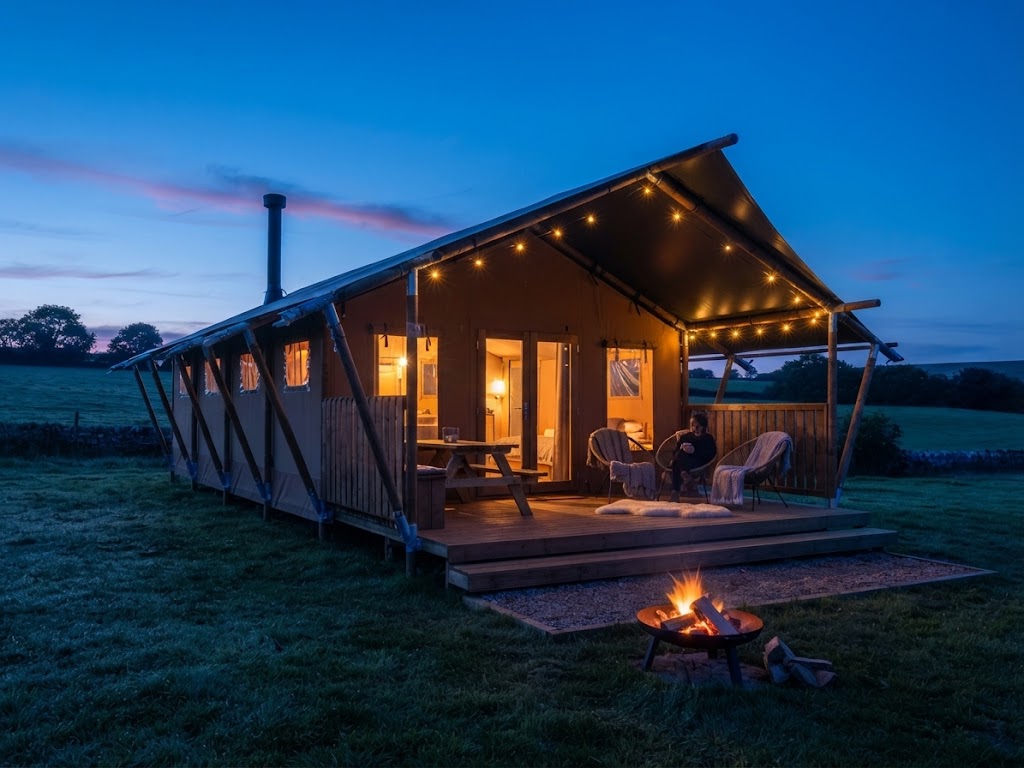
Most Welsh glamping sites take dogs, typically £10–£15 per dog per stay, in designated units. The real planning issue is beach bans — many Welsh beaches exclude dogs from May to September. North Wales and the Brecon Beacons have the best year-round walking. Enclosed pitches and hard flooring are what to look for. Bring a towel; you'll need it every day.
Exploring Dog-Friendly Glamping in Wales
Why Choose Dog-Friendly Glamping in Wales?
Glamping solves the specific problem dog owners have with holidays. Hotels mostly don't take dogs, or take them grudgingly and charge for it. Cottages take them but you're indoors. A glamping unit puts you in a field with a door that opens onto grass, and your dog can be outside in about four seconds.
The practical benefits stack up. No kennels — a week's boarding costs £150–£250, which is a decent chunk of the holiday budget. No separation anxiety at either end. And glamping sites are built around outdoor living, so a wet muddy dog isn't the crisis it would be in a hotel room.
Wales is a good fit because the walking is everywhere. 870 miles of coast path, three national parks, five AONBs, and a rights-of-way network that goes through farmland rather than around it. You'll never struggle to find a walk from the gate.
Top Dog-Friendly Glamping Locations in Wales
- Brecon Beacons / Bannau Brycheiniog — the best all-round dog region. Gentle enough terrain, the Monmouthshire and Brecon Canal towpath for flat lead-free-ish walking, waterfalls, and lots of sites that accept dogs.
- North Wales / Conwy Valley — forest tracks, riverside walks, and dog-friendly beaches out of season. Mountain scrambling isn't dog terrain, so stick to the valleys.
- Pembrokeshire — the Coast Path is superb with a dog, but check beach restrictions carefully. Freshwater West and Newgale stay open all year.
- Mid Wales — the Elan Valley, Cambrians, and huge amounts of empty space. Fewest restrictions anywhere.
- Ceredigion coast — quieter beaches, coast path, and dolphins offshore
Choosing between them: if your dog is fit and you want big days out, go north. If your dog is elderly or small, the Beacons and mid Wales are kinder. If you want beaches, come outside the May-to-September window and go west.
Accommodation Options for Dog-Friendly Glamping
Types of Dog-Friendly Glamping Accommodations
| Type | Dog verdict | Why |
|---|---|---|
| Pod | Best | Hard floors, easy to clean, lockable, warm |
| Cabin / lodge | Very good | Space, hard floors, often enclosed decking |
| Shepherd's hut | Good | Small, but wipe-clean and cosy |
| Safari tent | Mixed | Space is good, canvas and claws are not |
| Yurt | Mixed | Rugs and mud. Some sites won't allow dogs at all. |
| Bell tent | Poor | No barrier, easily damaged |
Dog-specific amenities worth looking for: an enclosed or fenced outdoor area, hard flooring inside, an outside tap or dog shower, a dog bed and bowls provided, and somewhere to hang a wet towel. A few Welsh sites now do proper dog washing stations, which is a small thing that makes a big difference after a coast path walk.
NIGHTSKY GLAMPING: A Dog-Friendly Experience
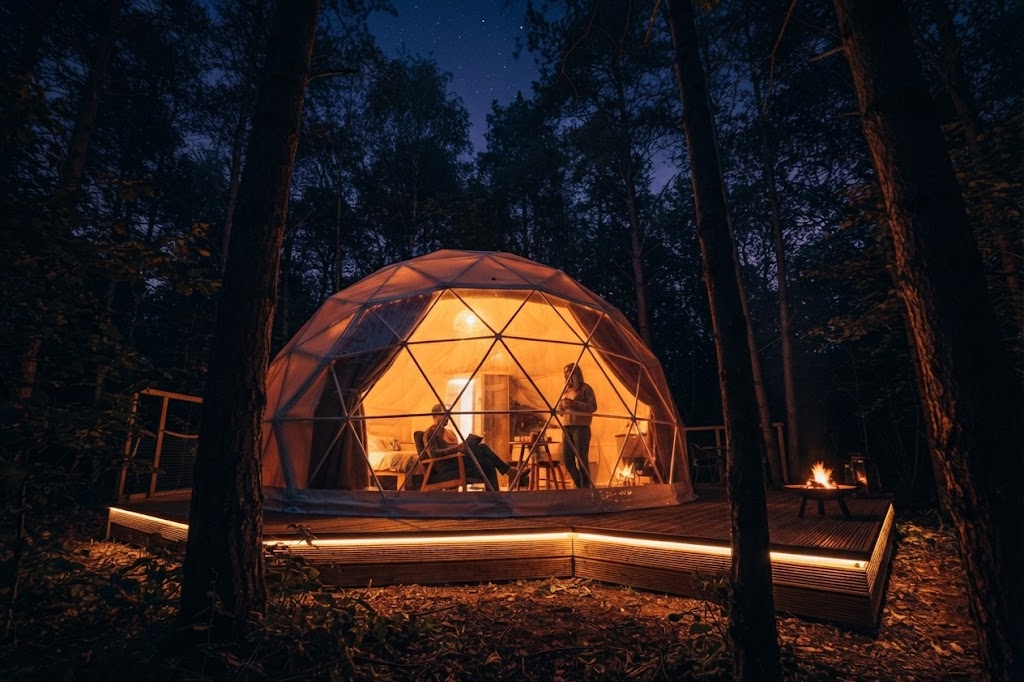
Nightsky Glamping is best known for its dark sky positioning in the Cambrian Mountains, and it's also a site that works well with dogs — largely because of where it is. Mid Wales has almost no beach restrictions, minimal crowds, and open country in every direction.
Dog-friendly provision at sites of this type typically covers designated units, an enclosed outdoor space, and owners who can tell you which footpaths avoid stock. That last one is worth more than any amenity — a local who knows which fields have sheep in April saves you a lot of grief.
Guest feedback on dark sky sites and dogs tends to be positive with one caveat: stargazing means standing outside in the dark for an hour, and a bored dog will let you know about it. Tire them out during the day.
Regional Preferences for Glamping in Wales
Dog-Friendly Glamping in North Wales
North Wales is the most-searched region for dog-friendly glamping in the country, and the supply has followed. Most Conwy Valley, Llŷn and Anglesey sites accept dogs in at least some units.
The region's dog assets: the Gwydir Forest above Betws-y-Coed, miles of forestry track with no stock. The Mawddach Trail near Barmouth — nine flat miles along an estuary, old railway line, excellent for older dogs. The Llŷn coast path, which is quieter than Pembrokeshire's. And Newborough Forest on Anglesey, though the red squirrel population means dogs must be on leads in parts of it.
What to avoid: high mountain routes. Scree, scrambling and 500-metre drops are not dog terrain, and mountain rescue teams in Eryri get called to dogs more often than they'd like. Our North Wales guide covers the sites; the valleys are where you want to be with a dog.
Enhancing Your Glamping Experience with Nearby Attractions
Dog-Friendly Beaches Near Glamping Sites
This is the thing that catches people out. Many Welsh beaches operate seasonal dog bans, generally 1 May to 30 September, and they're enforced with fines. The rules vary by local authority and sometimes by section of beach.
Beaches that stay open to dogs year round:
- Freshwater West, Pembrokeshire — wild, huge, no restrictions
- Newgale, Pembrokeshire — two miles of sand, dogs welcome all year on most of it
- Llanddwyn / Newborough, Anglesey — restrictions in parts, but large dog-friendly sections
- Morfa Bychan / Black Rock Sands, Gwynedd — you can drive on it, and dogs are fine
- Cefn Sidan, Carmarthenshire — eight miles, plenty of room
- Llangennith, Gower — dog-friendly at the northern end year round
Beaches with May–September bans include Tenby, Saundersfoot, Benllech, Trearddur Bay, Barmouth main beach, Rhossili in parts, and Whitesands. Check the local council's page before you go — Visit Wales and individual county sites publish current maps.
Beach safety with dogs: Welsh currents are strong, particularly on the west coast. Rinse salt and sand off afterwards or you'll be dealing with itching. Watch for jellyfish in late summer — barrel jellyfish wash up in numbers on the Cardigan Bay coast and dogs will absolutely eat them.
Exploring Walking Trails with Your Dog
- Monmouthshire and Brecon Canal — 35 miles of flat towpath, no stock, ideal for any age of dog
- Mawddach Trail — nine miles, flat, estuary views, Barmouth to Dolgellau
- Elan Valley Trail — old railway line around the reservoirs, mid Wales
- Gwydir Forest — Conwy Valley forestry, waterfalls, no livestock on most tracks
- Pembrokeshire Coast Path — spectacular, but clifftop sections need a lead and a firm grip
- Offa's Dyke Path — 177 miles along the border, mixed terrain
Trail safety and preparation: carry water and a collapsible bowl, because Welsh streams often run through sheep pasture. Leads on near any livestock, without exception — farmers are legally entitled to shoot a dog worrying stock, and every year some do. Ticks are widespread from March to October in bracken and long grass, so check daily and carry a tick remover. Adders exist on heathland and dunes; they're shy but dogs stick their noses into things.
Practical Considerations for Dog-Friendly Glamping
Booking and Availability of Dog-Friendly Glamping Sites
Dog-friendly units are a subset of a site's stock, which makes them scarcer than the general availability suggests. A site with ten pods might allow dogs in three.
- Filter for dog-friendly on the platform, then verify with the site directly
- Ask how many dogs are allowed — many cap at two
- Confirm the charge: £10–£15 per dog per stay is typical, occasionally per night
- Check whether dogs can be left unattended in the unit. Most sites say no.
- Ask about enclosed outdoor space and whether the site has livestock
Peak season for dog-friendly units is slightly different from general glamping — Easter and October half term are unusually busy because owners travel out of season to avoid the beach bans. Book those early.
Comparing Glamping to Dog-Friendly Holiday Cottages
| Glamping | Holiday cottage | |
|---|---|---|
| Cost per night | £95–£200 | £120–£300 |
| Dog charge | £10–£15 per stay | £25–£50 per stay |
| Minimum stay | 2 nights | Often 3–7 nights |
| Outdoor access | Immediate | Usually a garden |
| Space | Limited | Generous |
| Bad weather | Difficult | Much better |
| Mud tolerance | High | Depends on the carpets |
Which suits: glamping for short breaks, active dogs and summer. Cottages for a week, winter, multiple dogs, or anyone travelling with a dog that needs indoor space. If your dog is elderly, arthritic or nervous, a cottage is the kinder choice.
Travel Logistics for Bringing Your Dog to Wales
Wales is part of the UK, so there are no border requirements from England or Scotland. From Ireland or the continent you need an animal health certificate or a pet passport, rabies vaccination, and tapeworm treatment for entry into the UK — the ferry routes into Holyhead, Fishguard and Pembroke Dock all have their own procedures, so check with the operator.
For the journey itself:
- Break the drive every two hours; Welsh motorway services are limited once you leave the M4
- Bring water for the car — plastic bottles freeze badly and Welsh service stations are far apart
- Trains in Wales carry dogs free, up to two per passenger, no booking needed
- Pack: bed or blanket the dog knows, two towels, tick remover, poo bags in quantity, a long line, and food from home
- Take a photo of your dog on your phone before you travel, and check the microchip details are current
Vets: rural Wales has fewer practices and longer drives. Find the nearest one to your site before you arrive rather than at 9pm on a Sunday.
Frequently asked questions
How much do Welsh glamping sites charge for dogs?
£10–£15 per dog per stay is standard, occasionally per night at premium sites. Most cap at two dogs. Holiday cottages typically charge more, £25–£50 per stay.
Which Welsh beaches allow dogs in summer?
Freshwater West and Newgale in Pembrokeshire, Cefn Sidan in Carmarthenshire, Black Rock Sands in Gwynedd, and sections of Llanddwyn and Llangennith. Many popular beaches — Tenby, Saundersfoot, Benllech, Barmouth — ban dogs from 1 May to 30 September.
Can I leave my dog alone in a glamping pod?
Most sites say no, and it's usually in the terms. A dog barking in a field carries a long way. If you need to leave the dog for a few hours, ask the site directly — a few allow it for short periods in a crate.
Is glamping or a cottage better with a dog?
Glamping for short active breaks in decent weather; a cottage for longer stays, winter, or an older dog that needs indoor space. Glamping is cheaper per night and charges less for the dog, but two rainy days in a pod with a wet retriever is a long time.